

Why Pet Beds Lose Shape: Prevention & Fixes
Table of Contents
- Why Pet Beds Lose Shape: The Main Culprits
- How to Fluff a Dog Bed and Restore Its Loft
- How Washing Affects Bed Structure and Shape Retention
- Best Durable Dog Beds for Chewers and Heavy Users
- How Often to Replace Dog Bed: Signs and Timeline
- Maintenance Strategies to Prevent Shape Loss
- Conclusion
Last Updated: August 22, 2026
Why Pet Beds Lose Shape: The Main Culprits
Your dog's bed isn't as fluffy as it used to be. The sides are flattening, the foam feels compressed. Pet beds lose shape through foam cell collapse, weight distribution, heat exposure, and washing cycles. This guide covers the science behind foam degradation and practical steps to extend your bed's life, restore it, and select durable options built to last.
Foam Cell Collapse and Material Breakdown
Pet bed foam, typically viscoelastic or polyurethane, contains thousands of tiny air cells. When your pet lies on the bed repeatedly, pressure compresses these cells. Over time, they lose their ability to recover, a process called indentation recovery failure.
Each time your dog settles onto the bed, foam cells flatten slightly. If they don't fully re-expand between uses, compression becomes permanent. Low-density foam (under 1.5 pounds per cubic foot) collapses faster due to fragile cell structure (peer-reviewed research). Higher-density foam (2+ pounds per cubic foot) resists indentation longer, making it worth the investment for structural longevity.
Heat accelerates foam degradation. Body heat warms the foam, making it softer and easier to compress. Beds in direct sunlight or near heat sources degrade faster as thermal exposure weakens the cellular structure.
Weight Distribution and Pet Size
Heavier pets compress foam faster than lighter ones. A 100-pound dog distributes weight across a larger surface area than a 30-pound dog, but concentrated pressure points still collapse first, creating visible dog-shaped indentations.
The weight-to-density ratio is critical. A heavy dog on low-density foam shows sagging within months, while the same dog on high-density orthopedic foam maintains shape for years. Orthopedic beds last longer because they're engineered with denser foam and multi-layer support systems that resist compression.
Pet behavior matters too. A dog that moves around distributes weight evenly, slowing shape loss. A dog that sleeps in the same spot every night creates a permanent depression there.
Heat Retention and Thermal Degradation
Sustained heat weakens foam's polymer structure, making cells brittle and less elastic. Moisture compounds the problem, warm, damp foam loses structural integrity faster than dry foam. Beds in humid climates or near water bowls flatten more quickly.
How to Fluff a Dog Bed and Restore Its Loft
A flattened bed isn't always dead. Many beds can be partially restored with the right techniques. Fluffing works best on beds that have lost loft but haven't developed permanent structural damage.
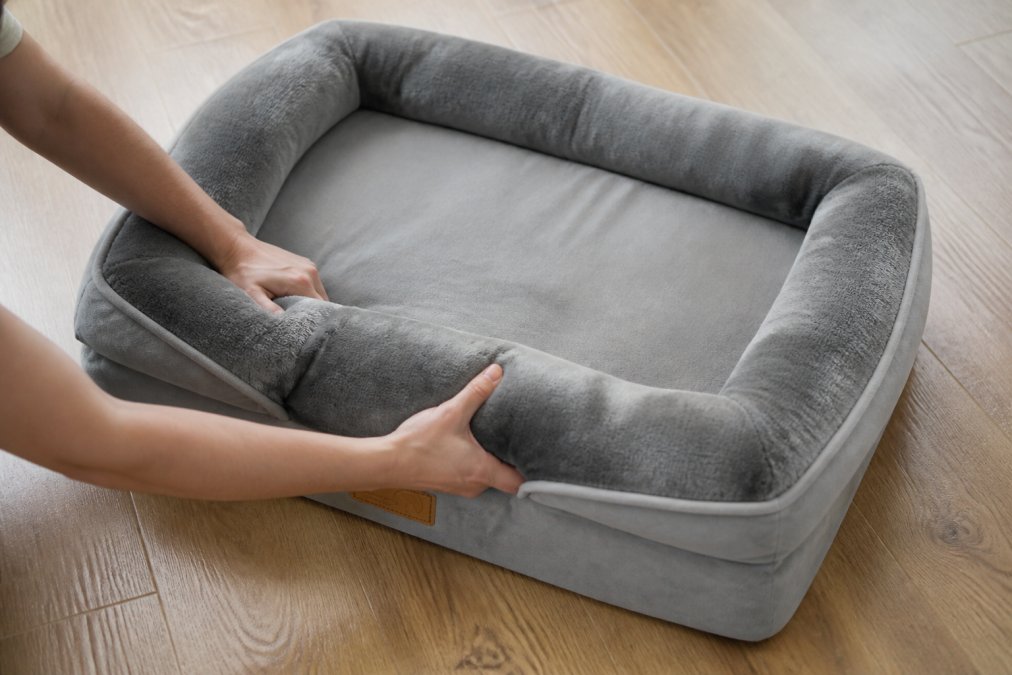
Step 1: Assess the Current Condition
Press your hand firmly into the foam. If it springs back within a few seconds, the foam still has recovery capability. If it stays compressed or rebounds slowly, cells have collapsed permanently. Check for visible damage: cracks, hardened sections, or brittle areas indicate advanced degradation that fluffing won't fix.
Step 2: Dry Fluffing Techniques
Place the bed on a flat surface and knead the foam like dough, working in sections with firm pressure for 2-3 minutes each. For removable covers, work directly on the foam for better control. You can also use a tennis ball to roll across the foam in circular motions, applying medium pressure to break up compressed areas.
Step 3: Moisture and Heat Recovery
Heat temporarily restores foam elasticity. Place the bed in direct sunlight for 2-3 hours or use a hair dryer on low heat, held 6-8 inches away, moving constantly. Knead the foam while warm, the combination works better than either alone. For moisture-damaged foam, place it in a dry location with good air circulation and a fan to speed drying.
How Washing Affects Bed Structure and Shape Retention
Machine washing accelerates shape loss through agitation and spin cycles that break down foam fibers. Hot water weakens polymer bonds, making foam more prone to compression.
Hand wash with cold water instead. Fill a bathtub with cool water and mild detergent, gently agitate, and rinse thoroughly. Spot-clean the foam itself with a damp cloth and mild soap, then air dry completely. Never use a dryer, heat damages cellular structure. Air drying takes longer but preserves integrity.
Wash the cover every 2-3 weeks, but only spot-clean the foam unless visibly soiled. This reduces stress from water exposure and drying cycles.
Best Durable Dog Beds for Chewers and Heavy Users
Not all beds are created equal. Durability depends on foam density, base construction, and material quality.
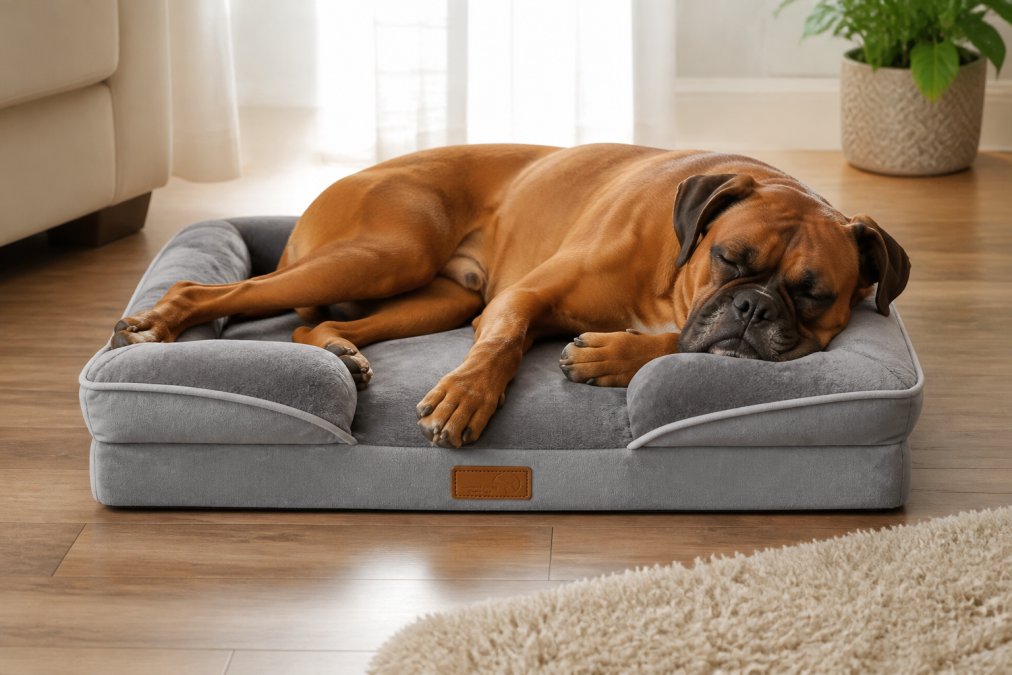
Material Density and Indentation Recovery
The best durable beds use high-density foam with indentation recovery ratings above 50%, meaning the foam returns to at least 50% of its original height after 65,000 compression cycles (astm.org). Look for beds specifying foam density in pounds per cubic foot, anything above 2 is solid, with premium beds using 2.5-3+ pounds per cubic foot.
The base matters as much as top foam. A supportive base layer prevents the entire bed from sagging. Single-layer beds compress more easily regardless of top foam density. The Spotted Play Orthopedic Dog Bed offers multi-layer foam construction that resists indentation, while the SunStyle Home Orthopedic Dog Bed uses egg crate foam with a dense base layer for larger dogs.

Orthopedic Options for Joint Support
Orthopedic beds prioritize durability through firmer foam that resists compression while providing cushioning. The ZOMISIA Orthopedic Dog Bed combines supportive egg foam with a dense base, maintaining shape through years of use. Orthopedic foam is typically 1-2 inches thicker with higher density throughout, providing consistent support that doesn't degrade as quickly.
The best orthopedic beds include removable, washable covers made from durable fabrics that resist pilling and wear, reducing the temptation to skip cleaning.
How Often to Replace Dog Bed: Signs and Timeline
Most quality dog beds last 3-5 years with proper care (aafco.org). Budget beds may need replacement within 1-2 years. Orthopedic beds can last 5-7 years, though timeline depends on pet size, activity level, and original quality.
Visible Wear and Structural Failure
Replace the bed when you see permanent indentations that don't recover, visible cracks or tears in foam, hardened or brittle sections, or a cover that no longer stays attached. If the foam feels lumpy or unevenly compressed, the cell structure has degraded beyond repair. If the bed sags in the middle under your pet's weight, the base layer has failed.
Pet Health and Comfort Indicators
Watch your pet's behavior. If they avoid the bed or seem uncomfortable, it has likely lost supportive qualities. Older pets especially need consistent support, a flattened bed can aggravate joint pain or arthritis. If your pet develops pressure sores or sleeps less soundly, the bed may be contributing to discomfort.
Maintenance Strategies to Prevent Shape Loss
Prevention extends your bed's life by 2-3 years.
Regular Cleaning Without Damage
Spot-clean stains immediately with cool water and mild detergent to prevent moisture from penetrating deep into foam. Vacuum weekly with low suction to remove dust and pet hair. Wash removable covers every 2-3 weeks in cold water on a gentle cycle, air drying completely. Avoid washing the foam unless necessary, using cold water and air drying for at least 24 hours.
Sunlight is fine for short periods (1-2 hours), but extended exposure degrades foam. Rotate beds in windows or move them to shadier spots during peak hours.
Rotation and Weight Distribution
Rotate the bed 180 degrees every 2-3 weeks to distribute your pet's weight across different areas, preventing permanent indentations. Encourage use of different areas by placing treats or toys in unused sections. For multi-pet households, consider multiple smaller beds rather than one large bed to distribute weight across more surface areas.
Pet beds lose shape because foam cells collapse under repeated pressure, heat accelerates degradation, and improper washing damages foam structure. But shape loss isn't inevitable. High-density orthopedic beds resist compression far longer than budget options, and proper maintenance, cool water cleaning, air drying, and rotation, can extend any bed's life by years.
My Store offers durable orthopedic options specifically designed to resist shape loss. The Spotted Play Orthopedic Dog Bed and ZOMISIA Orthopedic Dog Bed both use multi-layer foam construction with supportive bases that maintain structure through years of daily use. If your current bed is flattening faster than expected, upgrade to a bed engineered for durability. Shop Pet Essentials Now and give your pet the comfort and support they deserve.

=== FAQ ANSWERS (audit these too, same rules) ===
[1] Q: What causes pet beds to lose shape over time? A: Pet beds lose shape primarily due to foam cell collapse, where viscoelastic foam compresses under repeated pressure and weight. Heat retention accelerates this degradation, and washing can weaken structural integrity if done incorrectly. Material density and indentation recovery also play roles, lower-density foam loses its form faster than high-density alternatives. Heavy pets and aggressive use speed up sagging.
[2] Q: How often should I replace my dog bed? A: Replace your dog bed when it shows permanent indentation that won't recover, visible sagging, or when your pet stops using it due to lack of support. Most quality orthopedic beds last with proper care, though this varies based on pet weight, material density, and usage patterns. Check for allergen buildup and odors as additional replacement signals.
[3] Q: Can I restore a dog bed that has lost its shape? A: You can partially restore loft through dry fluffing, sunlight exposure, and air drying with gentle heat. However, once foam cells have permanently collapsed, full recovery isn't possible. Prevention through regular maintenance, proper washing techniques, and weight-appropriate bed selection is more effective than restoration. Orthopedic beds with higher density foam resist shape loss better than budget alternatives.
[4] Q: How does washing affect a pet bed's durability? A: Frequent washing, especially in hot water or high-heat dryers, accelerates foam degradation and fiber clumping in polyester loft layers. Machine washing can break down the structural integrity of viscoelastic foam and supportive bases. Use gentle wash cycles with cool water, air dry when possible, and spot-clean when feasible to preserve the bed's shape and cushioning properties.
Frequently Asked Questions
Q: What causes pet beds to lose shape over time?
A: Pet beds lose shape primarily due to foam cell collapse, where viscoelastic foam compresses under repeated pressure and weight. Heat retention accelerates this degradation, and washing can weaken structural integrity if done incorrectly. Material density and indentation recovery also play roles, lower-density foam loses its form faster than high-density alternatives. Heavy pets and aggressive use speed up sagging.
Q: How often should I replace my dog bed?
A: Replace your dog bed when it shows permanent indentation that won't recover, visible sagging, or when your pet stops using it due to lack of support. Most quality orthopedic beds last with proper care, though this varies based on pet weight, material density, and usage patterns. Check for allergen buildup and odors as additional replacement signals.
Q: Can I restore a dog bed that has lost its shape?
A: You can partially restore loft through dry fluffing, sunlight exposure, and air drying with gentle heat. However, once foam cells have permanently collapsed, full recovery isn't possible. Prevention through regular maintenance, proper washing techniques, and weight-appropriate bed selection is more effective than restoration. Orthopedic beds with higher density foam resist shape loss better than budget alternatives.
Q: How does washing affect a pet bed's durability?
A: Frequent washing, especially in hot water or high-heat dryers, accelerates foam degradation and fiber clumping in polyester loft layers. Machine washing can break down the structural integrity of viscoelastic foam and supportive bases. Use gentle wash cycles with cool water, air dry when possible, and spot-clean when feasible to preserve the bed's shape and cushioning properties.
This article was written using GrandRanker