

High Quality vs Cheap Pet Beds: What You're Really Paying For
Table of Contents
- High Quality vs Cheap Pet Beds: The Real Differences
- Orthopedic Dog Bed Benefits and Joint Health
- Durable Dog Beds for Chewers: What Stops Destruction
- How to Choose a Dog Bed: Materials That Matter
- Cost-of-Ownership: Why Cheap Beds Cost More Long-Term
- Size, Weight Capacity, and Breed-Specific Design
- Conclusion
Last Updated: August 13, 2026
High Quality vs Cheap Pet Beds: The Real Differences
When you're shopping for a dog bed, the price difference between a budget option and a premium one can feel shocking. You'll find cheap pet beds for under $30 and high quality pet beds selling for $100 or more. But here's what most pet owners don't realize: that price gap isn't just about brand markup. It reflects fundamental differences in materials, construction, durability, and how well the bed actually supports your dog's joints and health.

The real cost of a cheap bed isn't the $25 you pay upfront. It's the replacement cycle, the stress of watching your dog sleep on unsupportive foam that's already compressing, and the frustration of dealing with covers that pill after two washes. Below, we'll break down exactly what separates a bed that lasts from one that doesn't, and show you how to evaluate quality before you buy.
Orthopedic Dog Bed Benefits and Joint Health
An orthopedic dog bed is engineered to distribute your dog's weight evenly and reduce pressure on joints. Cheap beds use thin, low-density foam that compresses within weeks. High quality pet beds use multi-layer foam systems designed specifically to maintain support over years of use.

The difference matters most for senior dogs, large breeds, and dogs with existing joint conditions. But even young, healthy dogs benefit from proper orthopedic support, it's preventive care, not just treatment.
Pressure Relief and Foam Density
The foam inside a dog bed determines everything about how it performs. Cheap beds typically use low-density foam (around 1.0-1.5 pounds per cubic foot) that starts breaking down immediately. High quality pet beds use medium to high-density foam (2.0-3.0+ pounds per cubic foot) that maintains its shape and support for years.
Egg crate foam, which you'll see in premium beds, creates air pockets that distribute pressure more effectively than solid foam. This design reduces pressure points where your dog's joints touch the bed. When pressure concentrates on elbows, hips, and shoulders, as it does with flat foam, dogs develop sore spots and eventually joint inflammation.
The American Veterinary Medical Association recognizes orthopedic bedding as a supportive care tool for dogs with arthritis and joint conditions. A bed with proper foam density and pressure relief design can measurably reduce nighttime discomfort and improve mobility in aging dogs.
Material Durability and Longevity
Cheap foam breaks down through a process called compression set. After repeated pressure cycles, the foam doesn't fully spring back. After six months of daily use, a budget bed has already lost 30-40% of its support. High quality pet beds maintain 80%+ of their original support after a year of use.
This durability difference compounds over time. A cheap bed that costs $30 but lasts 8 months costs $45 per year. A high quality pet bed at $100 that lasts 4 years costs $25 per year, and provides better support the entire time.
Durable Dog Beds for Chewers: What Stops Destruction
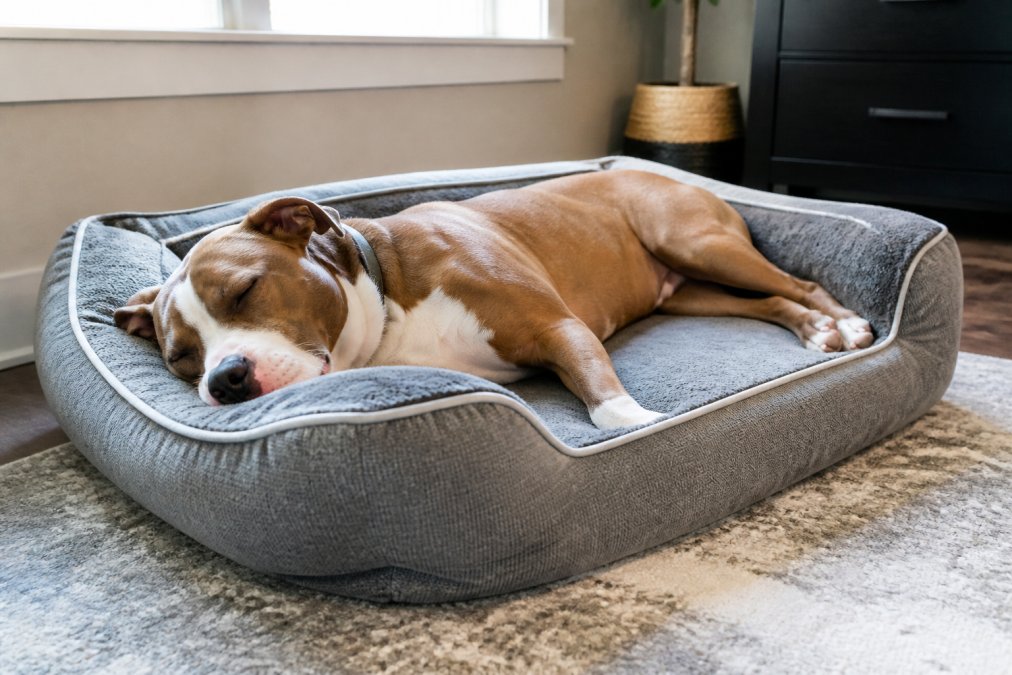
If your dog is a chewer, material quality becomes non-negotiable. Cheap fabric tears easily, and once a seam splits, the entire bed unravels within days. Durable dog beds for chewers use reinforced stitching, heavy-duty fabrics, and construction techniques that withstand aggressive chewing.
Tear-Resistant Fabrics and Reinforced Construction
High quality pet beds use fabrics rated for heavy use, typically 1000+ denier polyester or canvas blends. Cheap beds use thin polyester (300-500 denier) that punctures and tears under pressure. The difference is immediately obvious when you feel the fabric: premium materials feel thick and substantial, while budget fabrics feel thin and flimsy.
Stitching is where durability really separates cheap from premium. Budget beds use single-stitch seams that fail when stressed. Durable dog beds for chewers use double or triple-stitched seams with reinforced corners. Some premium beds add bar-tacking at stress points, extra stitching in an X pattern that distributes force across a wider area.
The SunStyle Home Orthopedic Dog Bed for XX-Large Dogs ($99.99) exemplifies this approach. Its construction includes reinforced seams and a non-slip bottom that prevents the bed from shifting when your dog moves. The egg crate foam support layer is encased in heavy-duty fabric that resists tearing from claws and teeth.

Removable, Machine Washable Covers
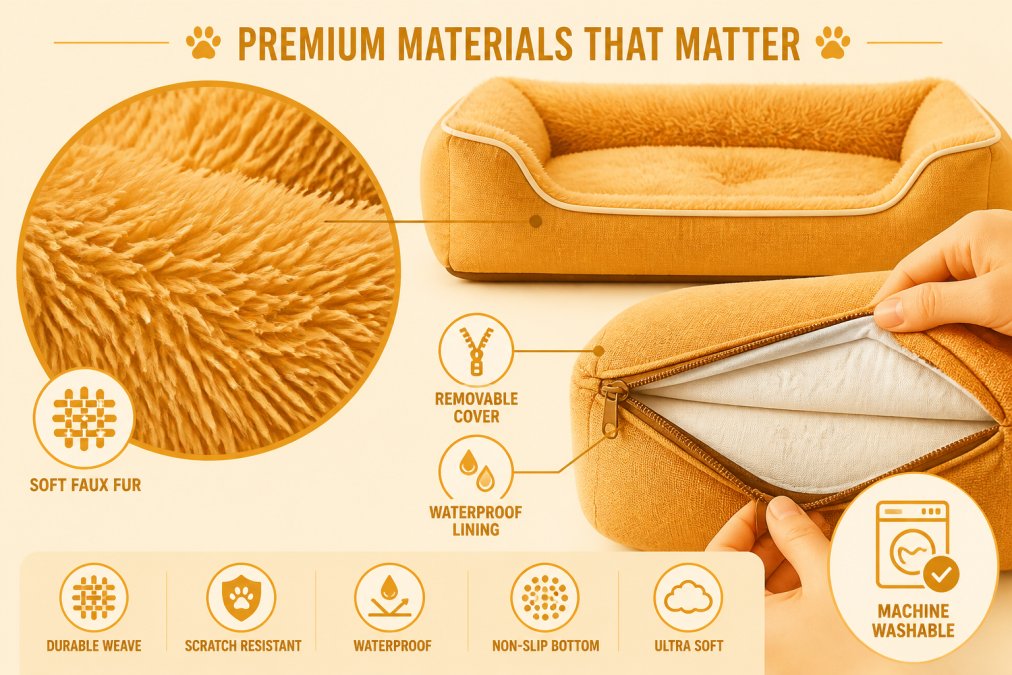
Cheap beds often have covers that are glued or poorly stitched on. Once they start coming off, they're done. High quality pet beds feature removable covers with heavy-duty zippers or velcro that can be washed dozens of times without degrading.
Machine washability matters more than most people realize. A bed that can't be easily cleaned accumulates odors, bacteria, and allergens. Removable covers mean you can wash them regularly without damaging the foam core. Budget beds that aren't machine washable require spot-cleaning, which never fully removes odors or stains.
Look for covers made from washable fabrics like microsuede or canvas, materials that don't pill or fade after multiple wash cycles. The Spotted Play Orthopedic Dog Bed with Sides ($89.99) includes a waterproof lining underneath the removable cover, protecting the foam from accidents while keeping the cover easy to clean.
How to Choose a Dog Bed: Materials That Matter
Choosing a high quality pet bed starts with understanding materials. The fabric, foam, base, and stitching all work together to determine how long the bed will last and how well it will support your dog.
Non-Toxic, Hypoallergenic, and Breathable Fabrics
Cheap beds often use fabrics treated with chemical dyes and finishes that off-gas, releasing volatile organic compounds into the air. Dogs breathe these chemicals daily, and they can trigger respiratory issues, skin reactions, and allergies.
High quality pet beds use hypoallergenic, breathable fabrics that don't off-gas. Look for beds made from natural or low-VOC materials. Faux fur, microsuede, and canvas are good indicators, they're durable and less likely to trigger sensitivities.
The ZOMISIA Orthopedic Dog Bed for Medium Dogs ($119.99) uses a plush faux fur exterior paired with an egg crate foam core. This combination provides softness and breathability without chemical treatments that irritate sensitive skin. The cover is machine washable, so you can maintain cleanliness without worrying about residual chemicals from dry cleaning.
Breathability matters because it affects temperature regulation and moisture management. A breathable fabric allows air circulation, keeping your dog cool in summer and preventing moisture buildup that leads to mold and odor.
Water-Resistant and Stain-Resistant Linings
Accidents happen. Cheap beds absorb urine, which soaks into the foam and creates permanent odors. Water-resistant linings protect the foam core while allowing the outer cover to remain soft and comfortable.
Stain-resistant treatments on the cover fabric make cleanup easier. These treatments don't mean the bed is waterproof, they mean spills sit on the surface long enough for you to blot them before they soak through. Combined with a waterproof lining underneath, this two-layer approach keeps the foam dry and odor-free.
The Bite-Resistant Waterproof Dog Mat ($22.99) demonstrates how waterproofing works at an entry level. Its waterproof surface prevents liquids from penetrating, making it ideal for dogs with incontinence or puppies still in training. For premium beds, waterproof linings are standard, not a special feature.
Cost-of-Ownership: Why Cheap Beds Cost More Long-Term
The math on pet bed spending is straightforward once you account for replacement cycles. A cheap bed at $30 that lasts 8 months costs $45 per year. A high quality pet bed at $100 that lasts 4 years costs $25 per year.
But the real cost goes beyond dollars. There's the time spent shopping for replacements, the disappointment of watching your dog sleep on a flattened, uncomfortable bed, and the potential veterinary costs if poor support contributes to joint problems.
Consider a scenario with an older dog. A cheap bed provides minimal support, and your dog wakes up with stiff joints. Over time, the poor support accelerates joint degeneration. By the time your dog is 10 years old, you're managing arthritis that might have been prevented with better bedding. Veterinary treatment for arthritis, medications, supplements, physical therapy, costs hundreds or thousands of dollars annually.
A high quality pet bed supporting proper joint alignment from the start can delay or prevent these issues. The $100 bed investment becomes cost-effective when it prevents years of medical expenses and improves your dog's quality of life.
Durability also means fewer replacements, which reduces waste. High quality pet beds that last 4-5 years generate far less landfill impact than cheap beds replaced annually.
| Factor | Cheap Bed | High Quality Pet Bed |
|---|---|---|
| Initial Cost | $20-40 | $80-150 |
| Expected Lifespan | 6-12 months | 3-5 years |
| Annual Cost | $30-50 | $20-40 |
| Foam Density | 1.0-1.5 lbs/cu ft | 2.0-3.5 lbs/cu ft |
| Washable Cover | Often not | Yes, removable |
| Waterproof Lining | No | Yes |
| Joint Support | Minimal | Excellent |
| Long-term Value | Poor | Excellent |
Size, Weight Capacity, and Breed-Specific Design
High quality pet beds come in size-specific designs because different breeds have different needs. A small dog curled up on an oversized bed loses the sense of security that bolstered sides provide. A large dog on an undersized bed has nowhere to stretch out comfortably.
Cheap beds often come in generic sizes that don't match actual dog dimensions. A "large" cheap bed might accommodate a 60-pound dog, but barely. Premium beds are engineered with specific weight capacities and dimensions that match typical body sizes.
Weight capacity matters for joint support. A bed rated for 50 pounds but holding a 70-pound dog compresses faster and provides inadequate support. High quality pet beds are conservatively rated, if they say 100 pounds, they genuinely support that weight without excessive compression.
Bolstered sides (raised edges) serve multiple purposes. They provide a sense of security, reduce anxiety, and give dogs something to rest their head on. Cheap beds often have minimal or no bolsters. Premium beds like the Spotted Play Orthopedic Dog Bed feature substantial bolstered sides that support the neck and head, reducing strain on the cervical spine during sleep.
The Semi-Closed Cat Bed with Universal Cover ($12.99) shows how design matters even at lower price points. Its semi-enclosed structure provides security for cats and small dogs, creating a den-like space that reduces anxiety. This design element is absent from most cheap beds, which are just flat rectangles.
Choosing between cheap and high quality pet beds comes down to what you value in pet care. Cheap beds save money upfront but cost more over time through replacement cycles, potential health impacts, and the frustration of inadequate support. High quality pet beds represent an investment in your dog's comfort, joint health, and long-term wellness.
My Store offers a curated selection of orthopedic dog beds designed for durability, comfort, and ease of care. The ZOMISIA Orthopedic Dog Bed for Medium Dogs ($119.99) combines supportive egg crate foam, a machine-washable cover, and waterproof lining, everything you need in a bed that lasts. For larger dogs, the SunStyle Home Orthopedic Dog Bed for XX-Large Dogs ($99.99) provides the same quality construction at a competitive price. Both beds include the features that separate quality from budget: proper foam density, removable covers, and reinforced construction.
When you're evaluating a bed, ask yourself: Will this support my dog's joints properly? Can I easily clean it? Will it still be comfortable in two years? If you're answering no to any of these questions, you're looking at a cheap bed. High quality pet beds answer yes to all three, and that's why they're worth the investment. Shop Pet Essentials Now and find the right bed for your dog's size, age, and needs.
Frequently Asked Questions
Are expensive high quality pet beds actually worth the investment?
Yes, high quality pet beds deliver measurable value over time. Premium beds with orthopedic support reduce joint strain, lasting 3-5 years versus 6-12 months for cheap alternatives. When you factor in replacement costs, veterinary visits for joint issues, and the comfort impact on your pet's sleep quality, a quality bed at $90-$120 often costs less per year than repeatedly buying $15-$30 beds that fall apart. Plus, they maintain their shape, resist staining, and support pet wellness, which cheap beds simply cannot match.
What makes orthopedic dog bed benefits so important for my pet?
Orthopedic support matters because it distributes your dog's weight evenly, reducing pressure on joints, hips, and spine. This is especially critical for large breeds, senior dogs, and pets with existing joint issues. Quality orthopedic beds use egg-crate foam or memory foam that conforms to your dog's body, improving sleep quality and reducing pain. Cheap beds use thin, low-density foam that compresses within weeks, offering no real support. Over time, poor support can contribute to joint deterioration, making orthopedic investment a preventive health choice, not just a comfort upgrade.
How do I know if a durable dog bed for chewers will actually hold up?
Look for beds with tear-resistant, heavy-duty fabrics (like reinforced polyester or faux fur), thick stitching, and non-slip bottoms that prevent sliding and tugging. Quality beds have removable, machine-washable covers so you can replace just the cover if needed, rather than discarding the entire bed. Check for reinforced seams and a supportive base that resists puncturing. Beds with water-resistant linings also prevent damage from accidents. Our customers report that premium beds withstand months of active chewing, while cheap beds often fail within weeks.
What materials should I avoid when choosing a pet bed?
Avoid beds with thin, low-density foam (compresses immediately), single-layer covers without waterproof backing, and non-removable covers (you're stuck cleaning the whole bed). Skip beds made with unknown materials or no safety certifications, they may off-gas or contain allergens. Cheap beds often use slippery fabrics that slide on floors, creating safety issues. Also avoid beds with glued seams instead of stitched ones; they fail quickly. Hypoallergenic, non-toxic materials with breathable, washable covers are worth the extra cost, especially for pets with sensitive skin.
This article was written using GrandRanker