

How to Clean Pet Beds: A Complete Step-by-Step Guide
Table of Contents
- Why Regular Cleaning Matters for Pet Bed Hygiene
- Step 1: Remove Debris and Pet Hair Before Washing
- Step 2: Prepare the Bed and Check for Stains or Accidents
- Step 3: Machine Washing Instructions for Most Pet Beds
- Cleaning Memory Foam Dog Beds: Special Care Instructions
- Hand Washing Large or Delicate Pet Beds
- Drying Methods to Prevent Mold and Mildew
- How Often to Wash Dog Bed and Maintain Freshness
Last Updated: August 23, 2026
Why Regular Cleaning Matters for Pet Bed Hygiene
A clean pet bed is foundational to your pet's health and comfort. Pet beds accumulate dander, allergens, bacteria, and odor-causing residue that can trigger skin irritation, respiratory issues, and unpleasant smells. Your dog or cat spends 12-16 hours per day on their bed, a breeding ground for dust mites, mold spores, and bacteria if left unchecked (peer-reviewed research). Regular washing removes these irritants and extends the bed's lifespan.
At My Store, we design beds with washability in mind. Our orthopedic dog beds feature removable, machine-washable covers and supportive foam that withstands regular cleaning cycles. Most veterinarians recommend washing pet beds every 1-2 weeks for active pets or those prone to accidents; homes with multiple pets or pets with allergies may benefit from weekly washing (aaha.org).

Step 1: Remove Debris and Pet Hair Before Washing
Before washing, remove loose pet hair and debris to prevent clogging your machine's drain and ensure a thorough wash.
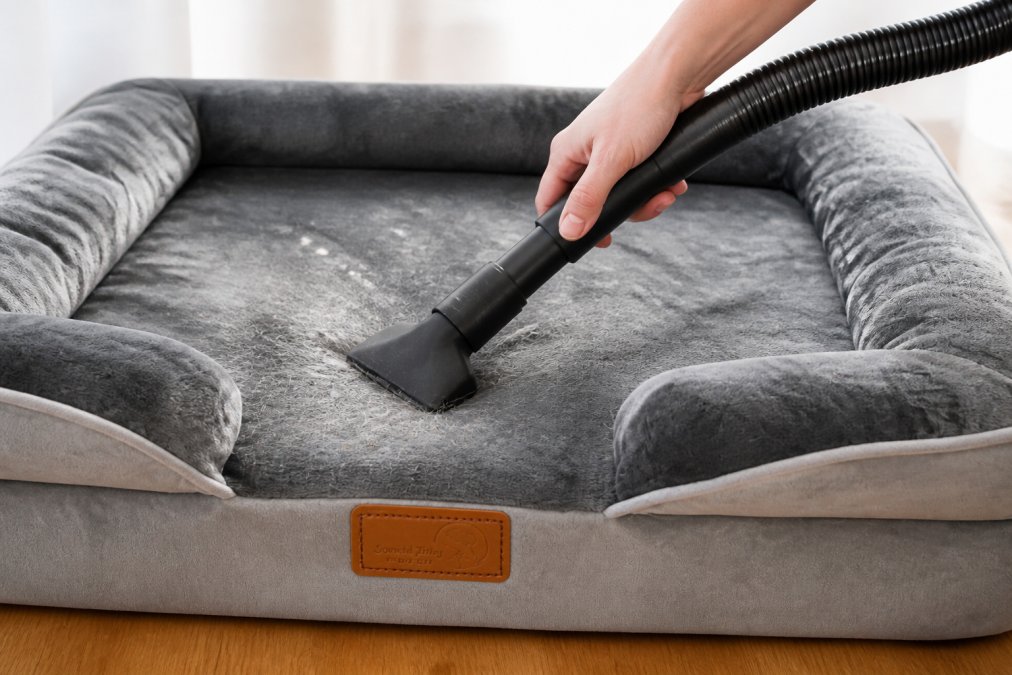
Take the bed outside or to a well-ventilated area. Use a vacuum with an upholstery attachment to thoroughly vacuum both sides, paying special attention to seams, crevices, and the underside. If your pet bed has a removable cover, detach it first and vacuum the cover and inner foam separately, this captures significantly more debris. A lint roller can catch remaining hair that the vacuum misses. Pay attention to edges and piping where hair collects; a soft brush or old toothbrush can help dislodge stubborn hair from textured fabrics.
Step 2: Prepare the Bed and Check for Stains or Accidents
Inspect your pet bed carefully for stains, accidents, or soiled areas that need pre-treatment. Identifying problem areas before washing ensures they come clean completely and prevents stains from setting permanently.
Dealing with Urine and Odor-Causing Residue
Pet urine is one of the most common challenges when cleaning pet beds. Enzyme-based solutions break down the uric acid crystals that cause both the smell and the stain.
For fresh accidents, blot the area with paper towels, don't rub, as this spreads urine deeper into the fabric. Mix an enzymatic cleaner with water according to product instructions and apply it generously to the stained area. Let it soak for 15-30 minutes, then blot again with clean cloths until damp but not soaking. For older stains or persistent odors, soak the affected area for several hours or overnight. White vinegar is a natural alternative: mix equal parts white vinegar and water, apply to the stain, let sit for 30 minutes, then blot thoroughly. The vinegar smell dissipates as the bed dries and helps neutralize urine odor.
Never use ammonia-based cleaners on pet beds, as ammonia can smell like urine to pets and may encourage re-marking. Stick with enzymatic cleaners or white vinegar for safe, effective odor removal.
Spot Cleaning Specific Stains
For general stains, create a pre-treatment solution using pet-safe detergent mixed with water. Apply it directly to the stain and let it sit for 10-15 minutes before washing. For stubborn stains, make a paste with baking soda and water, apply it to the stain, and let it dry completely before vacuuming or washing. Always test any cleaning solution on a hidden area first to ensure it doesn't cause discoloration or damage the fabric.
Step 3: Machine Washing Instructions for Most Pet Beds
Check your bed's care label first, as it specifies the maximum water temperature and any special instructions. If the label is missing, use warm or cold water rather than hot, which can damage foam or degrade fabrics.
Choosing the Right Cycle and Water Temperature
Select a gentle or delicate cycle rather than a normal or heavy-duty cycle. Warm water (around 90-110°F) offers a good compromise: it's warm enough to help dissolve detergent and kill some bacteria, but not so hot that it damages most fabrics or foam (the CDC). Cold water works for lightly soiled beds or to preserve delicate dyes.
Never overload your washing machine. A pet bed should take up roughly half the drum capacity, allowing water and detergent to circulate freely.
Pet-Safe Detergent and Rinse Cycles
Choose a detergent specifically formulated for pet bedding or a gentle, hypoallergenic laundry detergent. Avoid detergents with heavy perfumes, dyes, or enzymes that might irritate sensitive skin. Use slightly less detergent than you normally would, pet beds don't require heavy soap concentrations. If your machine has an extra rinse cycle option, enable it to remove all soap residue, which is especially important for pets with sensitive skin or allergies.
For beds with removable covers, wash the cover and inner bed separately. The cover can typically handle a standard gentle cycle, while the inner foam may benefit from an even gentler approach or hand washing if the label recommends it.

Cleaning Memory Foam Dog Beds: Special Care Instructions
Memory foam beds require gentler handling than standard polyester or cotton beds. The foam can break down or compress unevenly if exposed to high heat, aggressive agitation, or harsh chemicals.
For memory foam beds, always check if the cover is removable. If it is, remove it and wash the cover separately on a gentle cycle with cold or warm water. The inner foam core should ideally be hand washed or spot cleaned rather than machine washed. If machine washing is unavoidable, use the gentlest cycle available with cold water only, minimal detergent, and an extra rinse cycle. Never wring or squeeze the foam; instead, press gently to release excess moisture.
For spot cleaning memory foam, mix a mild detergent with cool water and gently work it into the foam with a soft brush or cloth. Rinse thoroughly with clean water, pressing gently to remove soap. Allow the foam to air dry completely before reassembling the bed.
Memory foam beds from My Store feature protective covers that shield the foam from direct contact with water during washing, making maintenance simpler while preserving the foam's integrity and support structure.

Hand Washing Large or Delicate Pet Beds
Some pet beds are too large for a standard washing machine, or their materials require hand washing to prevent damage. Hand washing gives you complete control over water temperature, agitation, and rinsing.
Fill a large basin, bathtub, or outdoor tub with warm water and add a small amount of pet-safe detergent. Submerge the bed and let it soak for 10-15 minutes. Gently knead the bed as if hand-washing delicate clothing, working the soapy water through the fabric without twisting or wringing. Continue for 5-10 minutes, then drain and refill with clean, warm water. Repeat the kneading motion to rinse out the detergent. You may need to refill and rinse 2-3 times until the water runs clear.
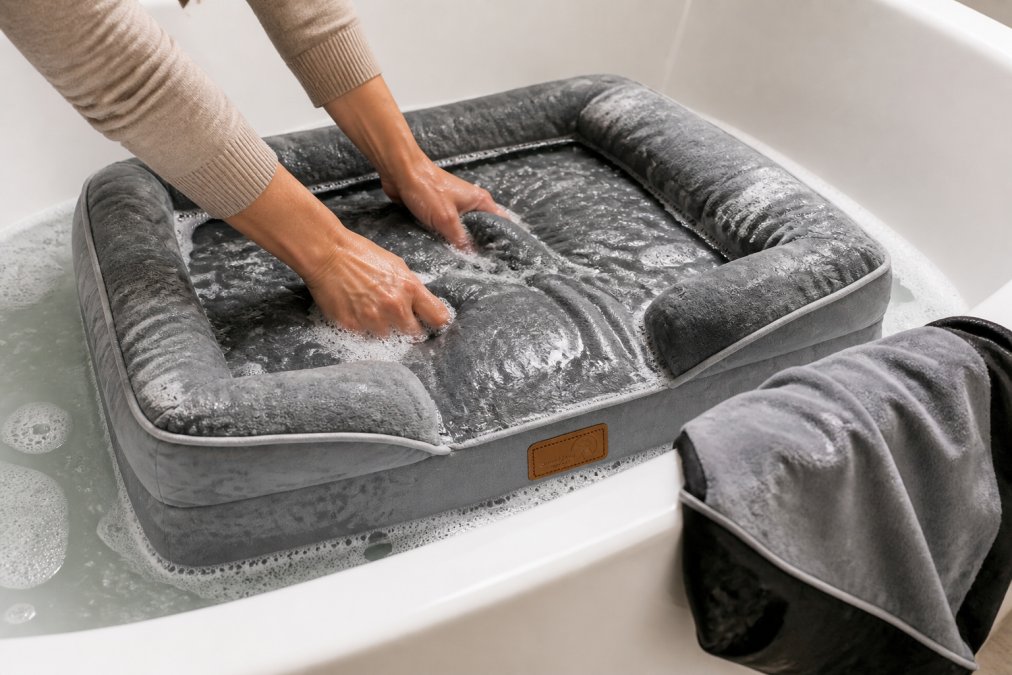
For the final rinse, use cool water to help close the fabric fibers. Gently press the bed to release excess water; never wring it.
Drying Methods to Prevent Mold and Mildew
Proper drying is critical to prevent mold, mildew, and musty odors. A damp bed left in a warm environment becomes a breeding ground for fungal growth within 24-48 hours. Remove beds promptly after washing and transfer them to your dryer or drying location immediately.
Gentle Tumble-Dry Settings and Air-Dry Options
Machine drying works well for most pet beds on low heat settings only. High heat can damage foam, shrink fabrics, or cause the bed to lose its shape. Select a low or gentle tumble-dry setting and run for 30-45 minutes. Check partway through; if nearly dry, stop the cycle to prevent overheating.
Air drying is the safest option for memory foam beds and delicate materials. Hang the bed outdoors in direct sunlight if possible, UV rays naturally kill bacteria and eliminate odors. If outdoor space isn't available, lay the bed flat indoors in a warm, well-ventilated area and use fans to improve air circulation. This method takes longer (12-24 hours) but eliminates heat-related damage.
For beds with removable covers, dry the cover in the dryer on low heat while the inner bed air dries.
How Often to Wash Dog Bed and Maintain Freshness
The frequency of cleaning depends on your pet's activity level, health status, and living environment. A baseline recommendation is every 1-2 weeks for most households. Wash pet beds weekly if your pet has skin allergies, frequent accidents, spends significant time outdoors, or has incontinence issues.
Between full washes, maintain freshness with spot cleaning for accidents and regular vacuuming. Vacuum the bed 1-2 times per week to remove dander, hair, and dust. If your pet bed starts to smell or shows visible soiling before your scheduled wash day, clean it immediately.
Consider keeping a second bed on rotation if you have a large orthopedic bed that takes a long time to dry. While one bed is washing and drying, your pet can use the other, ensuring they always have a clean, comfortable place to sleep.
Regularly inspect your bed's cover and foam for signs of wear, compression, or damage. A well-maintained bed with consistent washing can last 3-5 years or longer. My Store's orthopedic beds are designed to withstand frequent washing while maintaining their supportive structure and comfort, making them a smart long-term investment for pet parents who prioritize cleanliness and durability.
Keeping your pet's bed clean directly impacts their health, comfort, and happiness. The process becomes routine once you establish a regular schedule and understand the best techniques for your specific bed type. My Store offers orthopedic pet beds with features specifically designed for easy maintenance: removable washable covers, waterproof linings, and high-quality foam that withstands frequent cleaning. Shop Pet Essentials Now and discover beds that combine comfort with practicality, so you can focus on spending time with your pet rather than struggling with difficult cleaning tasks.
=== FAQ ANSWERS (audit these too, same rules) ===
[1] Q: What is the best way to wash a pet bed? A: The best approach depends on your bed's material. Most machine-washable pet beds should be cleaned on a low agitation cycle with pet-safe detergent in warm water. Remove covers and wash separately if possible. For orthopedic foam beds, check the manufacturer's instructions, many require gentle hand washing or low-heat machine cycles to preserve the foam. Always air dry to prevent damage to supportive materials.
[2] Q: How often should you wash a dog bed? A: Wash your dog's bed every 1-2 weeks if your pet spends significant time on it, or monthly for lighter use. Increase frequency if your dog has accidents, is prone to odor-causing residue buildup, or has skin sensitivities. Spot clean stains immediately with an enzyme cleaner to prevent permanent damage and reduce the need for full washes. Regular vacuuming between washes helps maintain freshness and reduces allergen and dander accumulation.
[3] Q: How do I remove dog urine from a pet bed? A: Act quickly: blot excess urine with paper towels, then rinse the spot with cold water. Apply an enzyme cleaner designed for pet urine, these break down the compounds causing odor. Let it soak for 10-15 minutes, then rinse thoroughly. For dried urine, soak the affected area in a mixture of equal parts white vinegar and water for 30 minutes before washing. Wash the entire bed afterward to eliminate any remaining odor-causing residue and ensure sanitary conditions.
[4] Q: Is it safe to put a dog bed in the dryer? A: Most pet beds should be air dried to prevent damage to foam, filling, and waterproof linings. High heat can break down orthopedic foam and warp materials. If your dryer has a gentle tumble-dry setting on low heat, you may use it briefly, but air drying is safer. Hang the bed outside or lay it flat indoors in a well-ventilated area. This also prevents moisture buildup and mildew, which can occur if beds are stored while still damp.
Frequently Asked Questions
Q: What is the best way to wash a pet bed?
A: The best approach depends on your bed's material. Most machine-washable pet beds should be cleaned on a low agitation cycle with pet-safe detergent in warm water. Remove covers and wash separately if possible. For orthopedic foam beds, check the manufacturer's instructions, many require gentle hand washing or low-heat machine cycles to preserve the foam. Always air dry to prevent damage to supportive materials.
Q: How often should you wash a dog bed?
A: Wash your dog's bed every 1-2 weeks if your pet spends significant time on it, or monthly for lighter use. Increase frequency if your dog has accidents, is prone to odor-causing residue buildup, or has skin sensitivities. Spot clean stains immediately with an enzyme cleaner to prevent permanent damage and reduce the need for full washes. Regular vacuuming between washes helps maintain freshness and reduces allergen and dander accumulation.
Q: How do I remove dog urine from a pet bed?
A: Act quickly: blot excess urine with paper towels, then rinse the spot with cold water. Apply an enzyme cleaner designed for pet urine, these break down the compounds causing odor. Let it soak for 10-15 minutes, then rinse thoroughly. For dried urine, soak the affected area in a mixture of equal parts white vinegar and water for 30 minutes before washing. Wash the entire bed afterward to eliminate any remaining odor-causing residue and ensure sanitary conditions.
Q: Is it safe to put a dog bed in the dryer?
A: Most pet beds should be air dried to prevent damage to foam, filling, and waterproof linings. High heat can break down orthopedic foam and warp materials. If your dryer has a gentle tumble-dry setting on low heat, you may use it briefly, but air drying is safer. Hang the bed outside or lay it flat indoors in a well-ventilated area. This also prevents moisture buildup and mildew, which can occur if beds are stored while still damp.
This article was written using GrandRanker