

How to Choose Pet Products: A 2026 Guide
Table of Contents
- Start with Pet Product Safety Standards
- How to Read Pet Food Labels and Ingredient Lists
- Identify Non-Toxic Materials and Pet-Safe Construction
- Verify Product Recall History and Safety Certifications
- A Non-Toxic Pet Toy Guide for Different Play Styles
- Match Products to Your Pet's Life Stage and Specific Needs
- How to Choose Pet Products That Actually Last
- Frequently Asked Questions
Last Updated: August 31, 2026
Start with Pet Product Safety Standards
The foundation of choosing pet products comes down to safety. Before considering price, design, or features, understand what standards govern pet product safety and which certifications matter.
Pet products fall under different regulatory frameworks depending on category. Pet food is regulated by the FDA, while toys and accessories may have varying oversight. The key is distinguishing third-party certifications that signal genuine safety testing from marketing claims without substance.
Look for products tested by independent organizations like the American Society for Testing and Materials (ASTM), which develops rigorous standards for pet product safety including durability, material safety, and potential hazards (astm.org). Certifications from the Pet Industry Joint Advisory Council (PIJAC) indicate manufacturers have committed to safety protocols.
Check whether manufacturers conduct toxicology testing on materials, especially for items your pet will chew, sleep on, or consume. Many premium brands invest in third-party lab testing to verify materials don't contain harmful substances. At My Store, we prioritize products that have passed independent safety certifications and transparent material testing, because your pet's health depends on it.
A critical mistake pet owners make is assuming all products sold online or in stores meet basic safety standards. Regulations vary significantly by product type and source, making verification essential rather than trusting marketing language alone.
How to Read Pet Food Labels and Ingredient Lists
Reading a pet food label correctly transforms you from a passive consumer into an informed buyer. Most pet owners scan front packaging and miss critical information on the back label that determines nutritional quality.
Start with the ingredient list, ordered by weight. The first ingredient should be a recognizable protein source like chicken, beef, fish, or lamb. If the first ingredient is corn or wheat, the formula prioritizes filler over nutrition. Protein content matters because it supports muscle maintenance, immune function, and overall health.
Look for the "complete and balanced" statement, which indicates the food meets nutritional requirements established by the Association of American Feed Control Officials (AAFCO) (aafco.org). This legally required statement tells you the food contains essential nutrients in appropriate proportions.
Check the guaranteed analysis section, which lists minimum percentages of crude protein and crude fat, plus maximum percentages of crude fiber and moisture. For adult dogs, aim for at least 18% protein; for cats, at least 26% (aafco.org). These percentages vary by life stage.
Avoid artificial dyes, flavors, and preservatives like BHA, BHT, and ethoxyquin. Natural preservatives like mixed tocopherols (vitamin E) are safer alternatives. Artificial dyes serve no nutritional purpose and some studies suggest potential issues with artificial additives in pet diets.
The ingredient list also reveals whether the formula includes fillers and by-products. "Meat by-products" or "meat meal" are lower-quality protein sources compared to whole meat. "Corn meal" or "wheat gluten" indicate grain-based fillers rather than nutrient-dense ingredients.
Identify Non-Toxic Materials and Pet-Safe Construction
What your pet sleeps on, plays with, and wears matters more than most pet owners realize. Materials directly contact your pet's skin, mouth, and respiratory system, so non-toxic construction is non-negotiable.
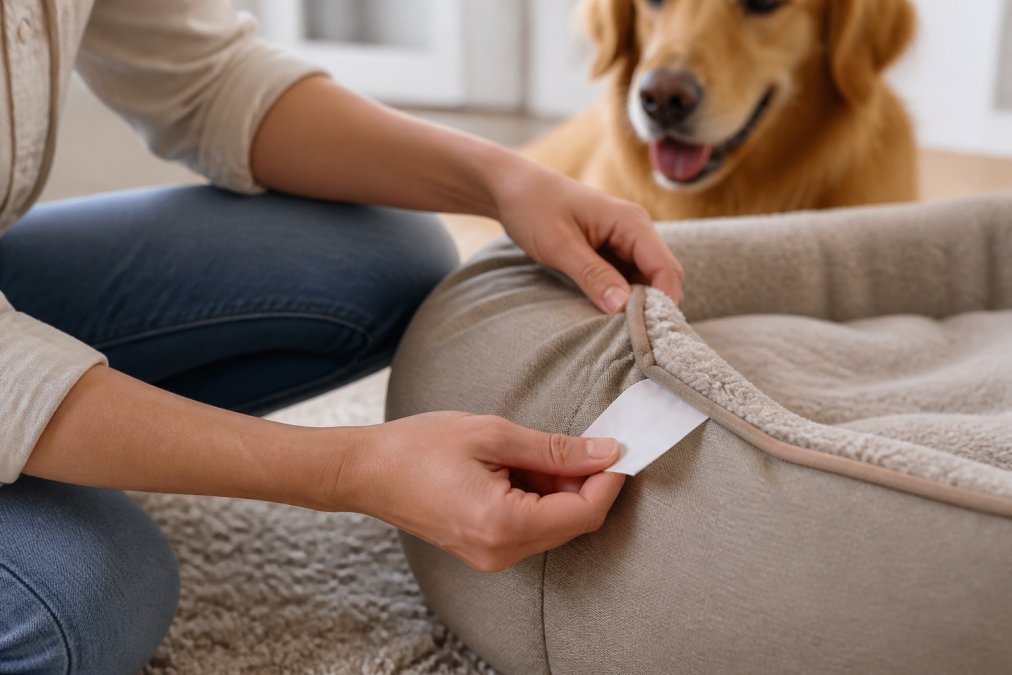
The most common concern with pet products is the presence of phthalates and BPA. Phthalates are plasticizers used to make plastic flexible and are found in some pet toys and bowls. BPA (bisphenol A) is used in harder plastics and can leach into food and water. Both substances raise health concerns because they can accumulate in your pet's body over time.
Verify that products are labeled "phthalate-free" and "BPA-free." Better yet, look for materials that inherently don't use these chemicals: natural rubber, untreated wood, organic cotton, and medical-grade silicone are safer choices that resist degradation and don't release harmful compounds.
Durable construction matters because materials that break down easily become ingestion hazards. A toy that sheds fibers or a bed that deteriorates quickly can cause intestinal blockages or other serious health issues. Products designed for heavy chewing should use reinforced stitching, thick materials, and construction methods that prevent tearing.
Breathability is critical for items like harnesses, collars, and beds. Non-breathable materials trap moisture and heat, creating environments where bacteria and fungal infections thrive. Mesh materials, natural fibers, and breathable synthetics allow air circulation while maintaining durability.
Hypoallergenic materials matter if your pet has sensitive skin or known allergies. Many conventional pet products use dyes, treatments, and synthetic finishes that trigger allergic reactions. Hypoallergenic options use natural dyes, minimal chemical treatments, and materials less likely to cause irritation.
Verify Product Recall History and Safety Certifications
Before buying any pet product, check its recall history. The FDA maintains a searchable database of pet product recalls, and this information is publicly available. A product with a history of recalls or safety issues should be avoided, regardless of price or popularity.
Search the product name and manufacturer on the FDA's official recall database. Look for patterns, do multiple recalls exist for the same brand? Do recalls involve the specific product you're considering? Repeated safety issues indicate systemic quality control problems.
Independent safety certifications provide third-party verification that a product has undergone rigorous testing. The difference between a manufacturer's claim and an independent certification is significant. A company can claim its product is "safe" without evidence, but an independent lab has no financial incentive to approve unsafe products.
Certifications worth looking for include ASTM International standards for specific product types, ISO certifications indicating quality management systems, third-party toxicology testing from accredited labs, and certifications from pet industry organizations like PIJAC.
Ask manufacturers directly about their testing protocols. Legitimate companies provide detailed documentation of safety testing, material sourcing, and quality assurance processes. If a company is vague about how they ensure safety, that's a red flag.
Material safety data sheets (MSDS) are another verification tool. These documents detail the chemical composition and safety information for materials used in products. Reputable manufacturers can provide MSDS information for materials in their products, giving you transparency about what your pet is exposed to.
A Non-Toxic Pet Toy Guide for Different Play Styles
Choosing the right toy for your pet depends on their play style, size, and chewing intensity. A toy that works perfectly for a gentle play-oriented cat will be destroyed in minutes by a powerful chewer.

For gentle players and cats, soft toys made from organic cotton or untreated natural materials work well. These toys should have reinforced seams and minimal stuffing to prevent ingestion hazards. Avoid toys with small parts, bells, or decorations that can be chewed off and swallowed.
For moderate chewers, rubber toys and durable synthetic materials hold up better. Look for toys specifically designed for chewing that are sized appropriately for your pet. A toy too small becomes a choking hazard; one too large frustrates your pet because they can't grip it effectively.
For aggressive chewers, heavy-duty options are essential. Reinforced rubber, thick rope toys, and specially designed chew products made from durable materials resist destruction. Rope toys require supervision because strands can be ingested, causing intestinal blockages.
Interactive toys that dispense treats or require problem-solving provide mental enrichment while reducing anxiety. Smart feeders and puzzle toys keep pets occupied and engaged. At My Store, our WiFi 3L Smart Pet Feeder with Camera & Speaker combines feeding with interactive engagement, letting you monitor your pet and dispense treats remotely while soothing anxiety with built-in calming sounds.

Toy rotation prevents boredom and extends product life. Rather than leaving all toys available, rotate them weekly to keep play fresh and prevent wear patterns that lead to faster deterioration.
Always supervise new toys until you understand how your pet interacts with them. Observing play behavior helps you identify which toy types are safest for your specific pet.
Match Products to Your Pet's Life Stage and Specific Needs
Pet nutritional and physical requirements change dramatically across life stages. A product perfect for an adult dog may be inappropriate or harmful for a puppy or senior.
Puppies and kittens require higher protein and fat percentages than adults to support growth and development. Life-stage-specific formulas contain appropriate calorie densities and nutrient ratios. Feeding an adult formula to a growing puppy can result in developmental orthopedic disease and other growth-related problems.
Senior pets have different requirements as metabolism slows and joint health becomes critical. Senior formulas typically include joint support ingredients like glucosamine and chondroitin. Protein needs remain high to prevent muscle loss, but calorie density may be lower to prevent obesity in less active pets.
Large breed puppies require specifically formulated diets to support proper bone development. Standard puppy formulas can cause growth too rapid, leading to joint problems. Large breed puppy formulas control calcium and phosphorus ratios to support healthy skeletal development.
Pets with specific health conditions require targeted nutrition. Allergies, digestive sensitivities, urinary health issues, and other conditions benefit from specialized formulas. Work with your veterinarian to identify whether your pet needs therapeutic nutrition or standard maintenance formulas.
Activity level influences caloric needs. An active working dog requires more calories than a sedentary indoor cat. Adjust portion sizes based on your pet's actual activity, not just their age or size.
Weight management matters for long-term health. Overweight pets develop joint problems, diabetes, and other serious conditions. Choose products with appropriate calorie density for your pet's target weight and activity level.
How to Choose Pet Products That Actually Last
Durability directly impacts both your wallet and your pet's safety. A product that falls apart quickly becomes a waste of money and a potential hazard.
Examine construction quality before purchasing. Look for reinforced seams, thick materials, and thoughtful design. Beds should have strong stitching throughout, not just at edges. Toys should have seams that withstand chewing and pulling. Harnesses should have secure attachment points and quality buckles that won't fail under tension.
Material thickness matters significantly. Thin fabrics tear easily; thick materials resist degradation. For beds and furniture, look for materials at least 1-2mm thick. For toys, especially chew toys, material density should be high enough to resist puncturing and tearing.
Weight capacity should exceed your pet's weight. A bed rated for 50 pounds but supporting a 70-pound dog will break down faster. Choose products with capacity ratings 20-30% above your pet's actual weight to account for movement and stress distribution.
Washability affects long-term durability. Products that can be machine washed maintain hygiene without degradation. Look for removable covers or fully washable designs. Mold and mildew growth shortens product life and creates health hazards.
Warranty and return policies indicate manufacturer confidence. Companies confident in durability offer generous return windows and warranties. A 30-day return policy and multi-year warranty suggest the manufacturer stands behind their product quality.
Customer reviews specifically mentioning durability provide real-world data. Look for reviews noting how long products lasted under actual use conditions. Products with overwhelmingly positive durability mentions likely live up to expectations.
At My Store, our Dog Stair Ramp with Bone Handle is designed for durability with high-density soft foam construction and a waterproof, washable cover. The non-slip base and reinforced structure support pets up to 50 pounds, and the removable cover allows easy cleaning without compromising the product's integrity over time.

Choosing pet products successfully requires understanding safety standards, reading labels carefully, and prioritizing materials and construction quality over price alone. The time you invest in evaluating products upfront prevents costly mistakes and keeps your pet safe and healthy.
At My Store, we've curated a selection of thoughtfully designed pet essentials that meet these standards. From our Automatic Pet Feeder with Double Bowl for straightforward feeding to our WiFi 3L Smart Pet Feeder with Camera & Speaker for anxious pets needing interactive engagement, every product prioritizes your pet's safety and comfort. Shop Pet Essentials Now and invest in products built to last, made from non-toxic materials, and designed with your pet's wellbeing at the center.

| Product Category | Key Consideration | What to Verify | Red Flags |
|---|---|---|---|
| Pet Food | Nutritional completeness | AAFCO statement, protein %, ingredient list | Artificial dyes, by-products as first ingredient |
| Toys | Safety and durability | Material composition, recall history, size appropriateness | Small detachable parts, thin materials, no certifications |
| Beds & Furniture | Construction quality | Seam strength, material thickness, washability | Thin fabric, weak stitching, non-removable covers |
| Collars & Harnesses | Breathability and fit | Mesh materials, adjustability, weight capacity | Non-breathable plastics, poor buckle quality |
| Water/Food Bowls | Material safety | BPA-free, phthalate-free certification | Plastic without safety certifications, poor drainage |
Frequently Asked Questions
Q: What should I look for when buying pet supplies?
A: Start by checking ingredient lists for complete and balanced nutrition, verify independent certifications like AAFCO for food products, and inspect materials for non-toxic construction. Look for transparent labeling that lists protein content, artificial dyes, and synthetic additives. For toys and beds, examine durability, safety recalls, and whether materials are BPA-free and phthalates-free. Always consult with your veterinarian about products suited to your pet's specific life stage and health needs.
Q: How can I tell if a pet product is safe for my animal?
A: Check for independent safety certifications and regulatory compliance marks on packaging. Research the product's recall history through official databases. Read ingredient labels carefully, avoiding phthalates, BPA, artificial dyes, and synthetic additives. Examine material safety data if available. For food, ensure it meets complete and balanced standards. For toys and accessories, test durability yourself and verify the manufacturer's quality assurance processes. When in doubt, ask your veterinarian to review the product before purchase.
Q: Are there specific certifications to look for on pet products?
A: Yes. For pet food, look for AAFCO certification, which ensures complete and balanced nutrition for your pet's life stage. For toys and accessories, seek products tested for toxicology and material durability. Some brands pursue third-party testing for phthalates, BPA, and other harmful additives. Check packaging for independent certification marks and consumer advocacy endorsements. Certifications signal that manufacturers follow product safety standards and conduct rigorous quality assurance testing.
Q: What's the difference between subscription and one-time pet product purchases in terms of safety?
A: Subscription services may offer consistent, pre-vetted products from trusted suppliers, reducing the risk of receiving recalled items. However, one-time purchases allow you to inspect products before committing. With subscriptions, verify the company's supply chain transparency and how quickly they respond to recalls. One-time purchases give you flexibility to rotate brands and adjust based on your pet's response. Either way, monitor your pet's wellness and watch for allergic reactions or adverse effects after introducing new products.
Q: How do I choose durable toys for aggressive chewers?
A: Select toys made from high-density materials tested for durability and resistance to tearing. Look for non-toxic, BPA-free construction that won't splinter or break into small pieces. Avoid toys with loose parts, artificial dyes, or synthetic additives that could cause intestinal blockage. Choose brands with proven durability testing and positive customer reviews from owners of similar aggressive chewers. Rotate toys regularly to maintain interest and reduce wear. Always supervise play and replace toys showing signs of damage immediately.
Q: How do I know if a pet product will work for my pet's specific needs?
A: Consult your veterinarian about your pet's unique health requirements, especially for older dogs with joint issues or pets with sensitive skin. Read product descriptions carefully for life stage requirements and ingredient bioavailability. Check customer testimonials from owners with similar pets. Look for products designed with your pet's size, breed, and activity level in mind. Many quality retailers offer easy returns if the product doesn't suit your pet, allowing you to test compatibility risk-free before committing to long-term use.
This article was written using GrandRanker