

How to Stop Dog Separation Anxiety: A Step-by-Step Guide
Table of Contents
- What Is Separation Anxiety in Dogs?
- Recognizing Signs and Symptoms of Separation Anxiety
- Understanding the Root Causes of Separation Anxiety
- Step 1: Create a Safe Space and Start Crate Training
- Step 2: Desensitization Training for Dogs with Separation Anxiety
- Step 3: Use the Best Calming Toys for Anxious Dogs
- How Long Does It Take to Train Separation Anxiety Out of Dogs?
- When to Seek Professional Help and Medication Options
Last Updated: August 27, 2026
What Is Separation Anxiety in Dogs?
Separation anxiety in dogs is a condition where a dog experiences significant distress when separated from their owner or left alone. Unlike typical canine independence, dogs with separation anxiety exhibit intense emotional responses to departure that can lead to destructive behavior, excessive vocalization, and elimination issues. This goes beyond normal puppy whining or occasional barking when you leave, it's a genuine anxiety disorder that affects your dog's wellbeing and can damage your home.
The condition stems from an unhealthy attachment pattern where the dog becomes overly dependent on your presence for emotional regulation. When you leave, the dog's anxiety threshold exceeds their ability to cope, triggering a cascade of stress responses. Some dogs develop this after a traumatic event, while others seem predisposed from puppyhood. Understanding that this is a behavioral health issue, not stubbornness or spite, is the first step toward effective treatment.
Recognizing Signs and Symptoms of Separation Anxiety
Dogs with separation anxiety display a range of anxious behaviors that intensify as soon as you prepare to leave or immediately after departure. The most common signs include destructive behavior focused on exit points (doors, windows, crates), excessive vocalization like continuous barking or howling, pacing, and elimination accidents despite being housetrained. Some dogs also exhibit self-injury, drooling excessively, or refusing to eat while alone.
The timing of these behaviors is key to diagnosis. Anxious behaviors that occur specifically when the owner is absent, or begins during departure preparation, point toward separation anxiety rather than other behavioral issues. You might notice your dog follows you from room to room obsessively, panics when you pick up keys or shoes, or becomes frantic the moment you approach the door. Some dogs show signs of emotional overload: panting, trembling, dilated pupils, or a glazed expression.
A helpful distinction: destructive behavior from boredom happens randomly throughout the day, while separation-related behavior clusters around your departure and absence. If your dog only destroys the couch when you're gone but ignores it when you're home, that's a separation anxiety indicator.
Understanding the Root Causes of Separation Anxiety
Separation anxiety develops through a combination of genetic predisposition, early life experiences, and learned behavior patterns. Dogs that didn't receive adequate exposure to brief, positive alone time during puppyhood often struggle with independence later. Similarly, rescue dogs with unknown histories may have experienced abandonment or confinement trauma that triggers anxiety around separation.
Life changes accelerate the condition. A sudden shift in routine, new job, relocation, schedule change, or the departure of a household member, can push a mildly anxious dog into full separation anxiety. Some dogs develop this after a frightening experience while alone, like a thunderstorm or loud noise. The dog learns to associate aloneness with danger, and anxiety becomes a protective mechanism.
Habituation also plays a role. If your dog has spent months with constant companionship (pandemic lockdown, remote work, sabbatical), they've become accustomed to your presence. When that routine suddenly changes and you return to the office, the dog hasn't learned gradual independence, they experience it as abandonment. The dog's anxiety threshold is simply overwhelmed by the new reality.
Step 1: Create a Safe Space and Start Crate Training
Creating a designated safe space gives your dog a controlled environment where they can manage anxiety more effectively. This isn't about confinement, it's about providing a predictable, manageable space where your dog feels secure. Choose a small room, corner, or crate where your dog can see you but has clear boundaries. Many dogs actually find small spaces less overwhelming than open rooms.
Crate training, when done correctly, becomes part of the solution rather than a trigger. The goal is to make the crate a positive refuge, not a punishment zone. Start by leaving the crate door open and tossing treats inside. Let your dog explore voluntarily. Gradually increase time spent in the crate with you present, then step out of sight for seconds at a time while rewarding calm behavior.
Never force your dog into the crate or use it as punishment. The crate should represent safety and routine consistency. Feed meals in the crate, leave high-value toys there, and create positive associations before attempting any separation. Once your dog enters the crate voluntarily and remains calm, you can gradually extend alone time. This process typically takes weeks, not days, patience is essential.
Set up the safe space with familiar bedding, access to water, and perhaps an item of your worn clothing that carries your scent. Some dogs benefit from white noise or calming music to mask external triggers. Consistent environmental cues that signal safety and routine can be very helpful for dogs.
Step 2: Desensitization Training for Dogs with Separation Anxiety
Desensitization training gradually exposes your dog to the triggers that provoke anxiety, primarily your departure cues and absence, in controlled, manageable doses. The key principle is to expose your dog to these triggers at levels below their anxiety threshold, so they remain calm while experiencing the stimulus.
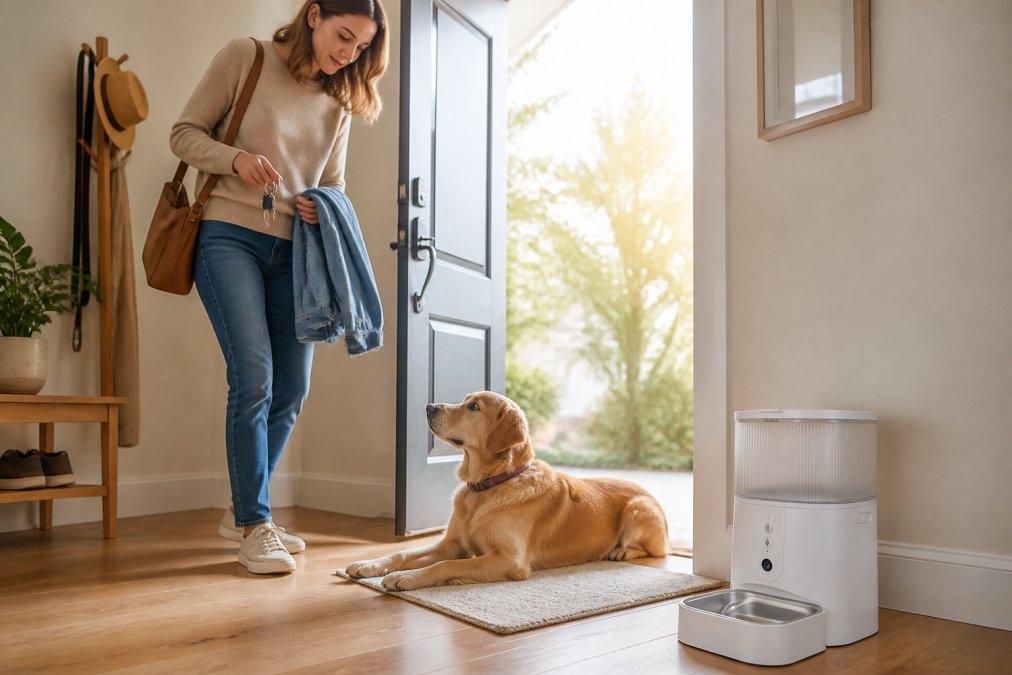
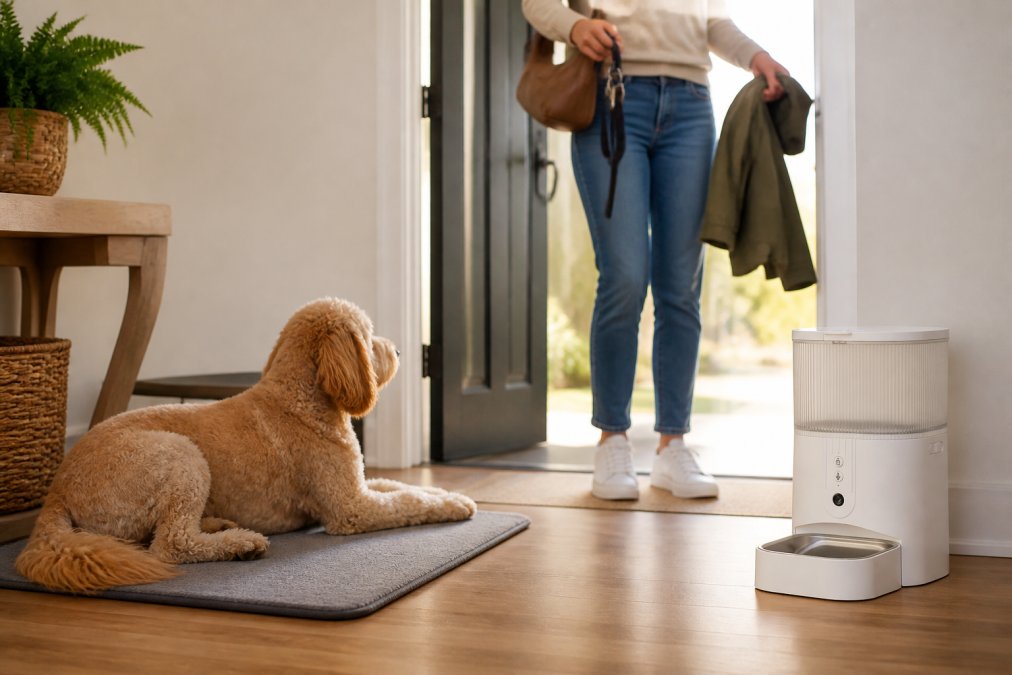
Start by identifying your departure cues: picking up keys, putting on shoes, grabbing your wallet, moving toward the door. Dogs become conditioned to these signals as predictors of separation. Begin desensitization by performing these actions without actually leaving. Pick up your keys, walk around the house, then sit back down. Repeat this dozens of times until your dog shows no anxiety response. This breaks the automatic association between the cue and your departure.
Next, practice very brief departures. Leave for 30 seconds, then return before your dog shows any anxiety. Reward calm behavior. Gradually extend duration, 45 seconds, 90 seconds, 3 minutes. The critical variable is that you return while your dog is still calm, not after anxiety escalates. This teaches the dog that your departure is predictable and temporary, and that calm behavior results in your return.
Counter-conditioning pairs departure cues with positive experiences. When you pick up keys, immediately give a high-value treat or start a puzzle toy session. When you approach the door, offer something rewarding. Over time, your dog learns that these cues predict good things, not abandonment. This reduces the emotional charge of departure signals.
The timeline for desensitization varies widely. Some dogs show improvement within weeks; others require months of consistent practice. The pace depends on severity and the dog's individual capacity for change. Consistency matters far more than speed. Skipping days or rushing progression typically resets progress.
Step 3: Use the Best Calming Toys for Anxious Dogs
Calming toys and enrichment items serve dual purposes: they occupy your dog's mind during your absence and provide comfort through sustained engagement. Food-stuffed toys like puzzle feeders redirect anxious energy toward problem-solving, which naturally calms the nervous system. The act of working to extract treats from a puzzle toy engages focus and reduces the mental space available for anxiety.
Long-lasting chews, bully sticks, yak chews, or other durable options, provide sustained oral stimulation that has a self-soothing effect. Dogs that chew are in a lower arousal state than dogs pacing or vocalizing. Scatter feeding, where you hide small portions of kibble around the safe space, encourages foraging behavior and extends engagement time.
My Store's product selection includes options specifically designed for anxious dogs. The Bite-Resistant Cartoon Pet Dog Toy ($14.98) provides durable engagement without the risk of destruction and ingestion of toy fragments, a real concern for anxious dogs that may chew compulsively. The canvas material withstands heavy chewing while remaining safe if pieces are swallowed.

For dogs that benefit from technological support, the WiFi 3L Smart Pet Feeder with Camera & Speaker ($126.54) allows you to monitor your dog's behavior during departures and dispense treats remotely. This maintains a connection during your absence and can interrupt anxious spirals with a timed treat or your voice. The camera feature lets you verify that your dog remains calm, providing peace of mind and helping you adjust your training timeline based on actual behavior rather than assumption.

Rotate toys to maintain novelty and engagement. A puzzle toy your dog ignores after three uses loses its value. Fresh toys or reintroduced toys after a week's absence renew interest. The goal is sustained engagement during your entire absence period, which gradually extends as your dog builds confidence in your return.
How Long Does It Take to Train Separation Anxiety Out of Dogs?
The timeline for resolving separation anxiety varies dramatically based on severity, age, and consistency of training. Mild cases with consistent daily practice may show meaningful improvement within 4-8 weeks (peer-reviewed research). Moderate to severe cases often require 3-6 months of dedicated work. Some dogs continue improving over a full year as trust in your return deepens.
The most honest answer: you're not training anxiety "out" in the sense of eliminating it permanently. You're building your dog's confidence and coping skills to the point where separation no longer triggers distress. This is a realistic, achievable goal. A dog that previously panicked for hours can learn to remain calm for your workday. That's success.
Progress isn't linear. You'll see improvement, then a setback when routine changes or stress increases. A move, new pet, or illness can temporarily worsen anxiety. This doesn't mean training failed, it means your dog needs additional support during transitions. Consistency during these setbacks prevents regression.
Rescue dogs and dogs with severe anxiety may require professional guidance to accelerate progress. A certified animal behaviorist can identify specific triggers and design a customized training plan. This isn't a failure on your part; it's recognizing that professional expertise speeds recovery in complex cases.
When to Seek Professional Help and Medication Options
Professional help becomes necessary when your training efforts plateau after 8-12 weeks, when anxiety is severe enough to cause self-injury, or when your dog's behavior escalates despite consistent practice. A veterinary behaviorist, a veterinarian with specialized training in behavior medicine, can assess whether medication would support your training efforts.
Medication doesn't replace training; it creates a window of reduced anxiety where training becomes more effective. A dog in acute panic can't learn new coping skills. Anti-anxiety medication lowers the baseline anxiety level, making your dog more capable of engaging with desensitization and counter-conditioning work (avma.org).
Common pharmacological options include SSRIs (selective serotonin reuptake inhibitors) like fluoxetine, which take 4-6 weeks to reach full effectiveness, and shorter-acting anti-anxiety medications like trazodone for specific situations (the FDA). Your veterinarian will discuss options, potential side effects, and monitoring requirements. Medication is a tool, not a permanent solution, though some dogs benefit from longer-term use.
Rescue dogs with unknown histories benefit from professional assessment because their anxiety often stems from past trauma. A behaviorist can identify trauma-related triggers and design exposure protocols that account for the dog's specific history. This specialized approach prevents inadvertent retraumatization during training.
The decision to pursue professional help is also practical. If your schedule doesn't allow for the daily, consistent practice that separation anxiety training requires, professional guidance or training services accelerate progress. Your veterinarian can refer you to certified behaviorists in your area.
Managing separation anxiety requires patience, consistency, and a genuine understanding that your dog isn't being difficult, they're genuinely distressed. The combination of environmental management, gradual desensitization, enrichment, and sometimes professional support creates real change. My Store's premium calming toys and smart feeders are designed specifically to support this training journey, giving your dog engagement tools that reduce anxiety while you build their independence. Start with small, manageable steps, celebrate incremental progress, and remember that most dogs improve significantly with dedicated effort over time.
Frequently Asked Questions
What is the 3-3-3 rule for dog anxiety and how does it relate to separation anxiety?
The 3-3-3 rule is a guideline for rescue and shelter dogs: 3 days to decompress, 3 weeks to learn your routine, and 3 months to feel truly at home. This timeline helps set realistic expectations for how long it takes to stop dog separation anxiety. Newly adopted dogs often show heightened anxiety during the first weeks because they're adjusting to a new environment. Understanding this progression helps you stay patient during the critical early period when your dog is most vulnerable to separation-related behaviors.
Can separation anxiety in dogs be cured completely?
Separation anxiety can be significantly reduced and managed, though complete elimination depends on the severity and your dog's individual temperament. Most dogs respond well to consistent desensitization training, environmental enrichment, and routine. Some dogs may always feel mild anxiety during departures, but with proper management, including calming toys, safe spaces, and positive reinforcement, they can learn to remain calm and independent. Professional help from a veterinary behaviorist increases success rates, especially for severe cases.
What are the best calming toys for anxious dogs during training?
The most effective calming toys combine mental stimulation with soothing properties. Food-stuffed toys, puzzle feeders, and long-lasting chews redirect anxious energy toward positive activities. Products like the [Bite-Resistant Cartoon Pet Dog Toy](https://furrygate.com/products/pet-dog-cartoon-animal-bite-resistant-pet-toy) ($14.98) provide durable engagement that lasts, preventing destructive behavior. Rotating toys keeps novelty high. Pair physical toys with smart feeders like the [WiFi 3L Smart Pet Feeder](https://furrygate.com/products/wifi-3l-smart-feeder-pet-with-app-for-dogs-and-cats-with-camera-video-speaker-feeders-automatic-pet-feeder-smart-food-dispenser) ($126.54), which dispenses food throughout the day and can be controlled remotely, creating predictable meal-time anchors that reduce anxiety spikes.
How long should I leave my dog alone if they have separation anxiety?
Start with very short absences, just 30 seconds to 2 minutes, and gradually extend duration as your dog remains calm. This gradual exposure is core to desensitization training. Most dogs need 4-8 weeks of consistent practice before tolerating 1-2 hour absences comfortably. The timeline varies based on anxiety severity and your dog's learning pace. Rescue dogs may need longer. Consistency matters more than speed; rushing the process often causes setbacks. Track your dog's anxiety threshold and only increase duration when they show calm behavior during current intervals.
This article was written using GrandRanker