

How to Travel with a Calming Dog Bed: Stress-Free Trips
Table of Contents
- Why a Calming Dog Bed Changes Road Trips
- Best Travel Dog Beds for Anxiety
- How to Keep a Dog Calm in the Car
- Packing Your Calming Dog Bed for the Trip
- Setting Up the Bed at Hotels and Rest Stops
- Your Dog Travel Essentials Checklist
- Cleaning Your Calming Dog Bed After Travel
- Common Mistakes When Traveling With a Calming Dog Bed
- Frequently Asked Questions
Last Updated: September 26, 2026
Why a Calming Dog Bed Changes Road Trips
Learning how to travel with a calming dog bed starts with one simple fact: a familiar bed does more for your dog's nerves than any treat or toy. It carries their scent. It feels like home. And on a long drive, that sameness is what keeps a nervous dog settled.
At My Store, we hear from pet parents every week who dread car rides. Their dogs pace, whine, or drool the whole way. A calming bed gives them one steady anchor in a world that keeps moving.
Here's the good news. You don't need a special vehicle or a vet visit to fix this. You need the right bed, a solid packing plan, and a calm setup at every stop.
Below, we'll show you exactly how to travel with a calming dog bed, from picking the right one to cleaning it after the trip. The steps are simple, and most take under ten minutes.
Best Travel Dog Beds for Anxiety
The best travel dog beds for anxiety are compact, washable, and built from materials that hold their shape under pressure. But "durable" and "calming" are vague marketing words. Here is what they actually mean in fabric and fill terms, so you can read a product listing and know whether it will survive your dog.
What "Durable" Actually Means in Fabric Terms
No fabric is truly chew-proof. The realistic goal is a bed that survives normal scratching, digging, and mouthing long enough for your dog to bond with it.
Fill Materials and Why They Matter for Calming
A calming bed works partly through pressure and warmth. The fill determines both.
- Shredded memory foam, conforms to the body and distributes weight, which many anxious dogs find soothing. It can clump if washed aggressively.
- Solid memory foam, holds shape best and does not shift, but it is bulky to pack and slow to compress.
- Polyester fiberfill, light, cheap, and packable, but it flattens fastest and offers the least pressure relief.
- Orthopedic foam with a gel layer, adds cooling, useful in a warm car, but the gel layer can crack if folded repeatedly.
A Practical Selection Table
| Feature | Why It Matters | What to Look For |
|---|---|---|
| Cover fabric | Determines chew and claw survival | 840D+ ballistic nylon or ripstop |
| Fill type | Determines calming pressure and packability | Shredded memory foam |
| Seam construction | First failure point on most beds | Double-stitched or bound seams |
| Base grip | Stops sliding on car seats | Rubberized or silicone-dotted base |
| Cover removal | Determines how often you actually wash it | Full zip-off, machine washable |
| Weight | Determines whether you bring it at all | Under 3 pounds for small breeds |
What Makes a Bed Travel-Friendly
A travel-friendly bed folds, rolls, or flattens without permanently creasing the fill. It also cleans up fast, because road trips are messy. Look for removable covers and machine-washable fabric. Weight matters too. Anything over a few pounds gets annoying to carry between the car, the hotel, and the rest stop.
Durable Materials That Survive the Road
Chew-resistant fabric is the difference between a bed that lasts years and one that lasts a week. Plush and fleece feel great, but they tear faster under a determined chewer. A tight weave, reinforced seams, and a thick fill hold up better after repeated rolling and stuffing into a bag. If your dog is a serious chewer, prioritize the cover fabric over the fill, because the cover is what fails first.
How to Keep a Dog Calm in the Car
Keeping a dog calm in the car comes down to three things: practice, positioning, and a familiar comfort object. Short trial drives beat one long first trip. But "practice" is not a plan. Here is a structured desensitization protocol you can run over a week, plus how to handle the situation when you have more than one dog in the vehicle.
A 7-Day Desensitization Plan
The goal is to build a positive association between the car, the bed, and calm behavior before you ever take a real trip. Each session should end while your dog is still relaxed, not after they have already panicked.
- Day 1, Parked exposure. Put the calming bed in the parked car. Let your dog sniff, climb in, and settle. No engine. Five to ten minutes. Reward calm behavior with treats.
- Day 2, Engine idle. Same setup, but start the engine and let it idle. Watch for lip licking, yawning, or pacing. If those appear, shorten the session.
- Day 3, Short driveway roll. Move the car a few feet and stop. Repeat two or three times. The bed stays in place the whole time.
- Day 4, Five-minute loop. Drive around the block. Keep the bed where your dog can lie on it. Speak calmly, do not over-comfort.
- Day 5, Ten-minute errand. Drive to a quiet destination and back. Do not get out. The point is the ride, not the arrival.
- Day 6, Fifteen minutes with a stop. Drive, park, let your dog rest on the bed for a few minutes, then drive home.
- Day 7, Twenty to thirty minutes. A longer loop that mimics a real leg of a trip. If your dog stays settled, you are ready to travel.
If your dog regresses at any step, drop back one day and repeat.
Positioning and Restraint
A calming bed only helps if your dog can actually lie on it. That means the bed needs a stable, flat spot in the back seat or cargo area, not the front passenger seat. Pair the bed with a secured harness or a crate so the bed does not become a projectile in a sudden stop.
A common mistake is feeding a big meal right before a long drive. That is a recipe for an upset stomach. Feed a light meal a few hours before you leave.
Multi-Dog Households and Resource Guarding
If you travel with more than one dog, the calming bed can become a contested resource. Two dogs will not share one bed calmly, and forcing them to try can trigger guarding behavior that makes the whole trip worse.
- One bed per dog. Do not expect siblings to share. Each dog needs their own space, even if that means two smaller beds instead of one large one.
- Separate the beds physically. Place them on opposite sides of the back seat or cargo area so neither dog can reach the other's bed without moving.
- Watch for guarding signals. Stiffening, hovering over the bed, or a hard stare at the other dog are early warnings. If you see them, separate the dogs for that leg of the trip.
- Feed and water separately at stops. Resource guarding often starts around food and spreads to bedding. Keep the routines distinct.
- Rotate who gets the window. If both dogs want the same spot, alternate positions between legs of the trip so neither dog claims a permanent territory.
If guarding is already established at home, address it before you travel. A bed in a moving car is not the place to retrain a resource guarder.
Packing Your Calming Dog Bed for the Trip
Packing a calming dog bed the right way protects the fill and saves trunk space. The goal is to compress the bed without crushing the cushion flat. A crushed bed loses the support that makes it calming in the first place.

Start by shaking out any loose hair. Then fold the bed in thirds, not in half. Folding in half creases the middle, which is exactly where your dog's weight lands.
For longer trips, a vacuum-seal bag works well. Just don't leave the bed sealed for days. The fill needs air to bounce back.
Rolling and Vacuum Sealing Without Damaging the Fill
Roll from the foot of the bed toward the head, pressing out air as you go. If you use a vacuum bag, seal it loosely at first, then tighten. Once you arrive, unpack right away and shake the bed out. Give it an hour to fluff back up before your dog uses it.
Setting Up the Bed at Hotels and Rest Stops
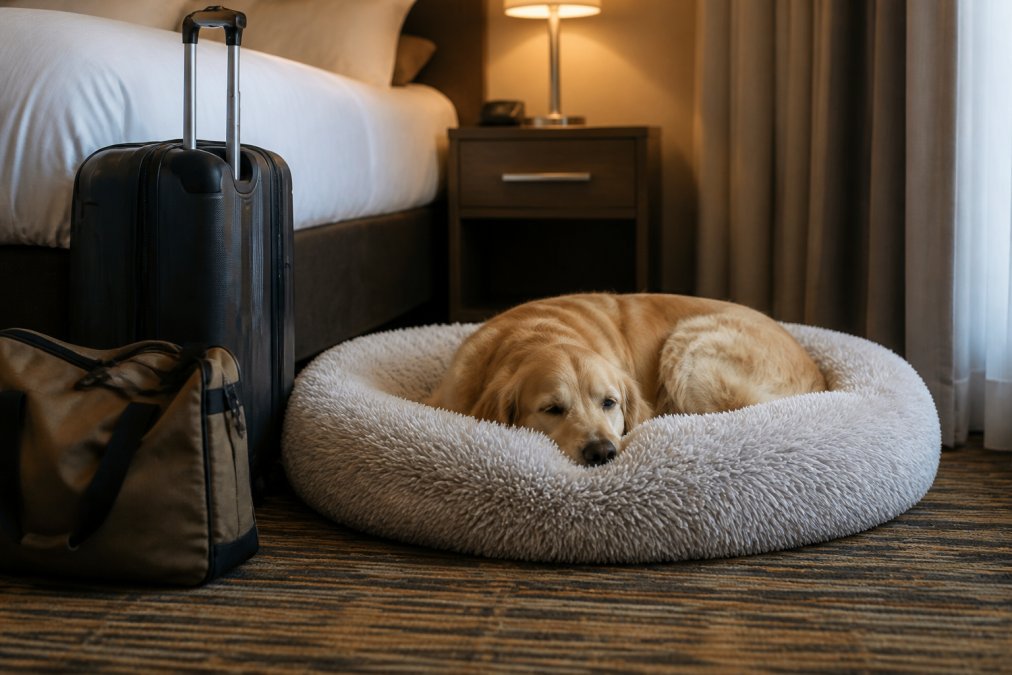
Set up the bed the moment you arrive, before your dog explores the room. A familiar bed in a strange place tells your dog where "home" is for the night. Place it away from the door and away from heating vents.
At rest stops, lay the bed on a flat, dry surface. Skip hot pavement and wet grass. A quick five-minute rest on their own bed can reset a stressed dog for the next stretch of driving.
For dogs who ride in a console or booster seat, a small travel mat works well for quick breaks.
Our Car Console Pet Travel Seat gives small dogs a secure, washable spot that reduces the bumps and jostling that spike anxiety on the road. Pair it with a calming bed at each stop, and your dog gets a consistent routine from car to room.

Your Dog Travel Essentials Checklist
A good dog travel essentials checklist keeps you from digging through bags at a rest stop. Pack these items before every trip:
- Calming dog bed, folded and bagged
- Collapsible water bowl and bottled water
- Food measured into portions for each day
- Leash, harness, and ID tags
- Waste bags and paper towels
- Any medication, plus a copy of vet records
- Favorite chew toy or blanket
- Towel for muddy paws
Keep this list in the car so you never repack from scratch. The ASPCA's travel safety guidance recommends securing pets in a crate or harness and never leaving them alone in a parked car.
For a warm, packable option, our Paw Print Fleece Dog Bed Mat rolls small and works for both car and hotel.
Cleaning Your Calming Dog Bed After Travel
Clean the bed within a day of getting home. Road grime, drool, and dirt build up fast, and a dirty bed can trigger itching or odor. Most covers zip off and go straight into the machine.
Use a gentle, pet-safe detergent. Skip fabric softener, which coats the fibers and traps odor. Air dry when you can. High heat can shrink covers and clump the fill.
A clean bed smells like home. That familiar scent is a big part of why it calms your dog in the first place.
Common Mistakes When Traveling With a Calming Dog Bed
The biggest mistake is skipping the introduction. A brand-new bed on a strange trip feels foreign, not soothing. Let your dog use the bed at home for a week first.
Other common slip-ups:
- Packing the bed so tight the fill stays flat
- Forgetting to secure the bed so it slides during turns
- Leaving the bed in a hot car, which can warp the fill
- Skipping breaks, which spikes stress for everyone
A common mistake is expecting instant calm on trip one. Calmness training takes repetition. Each short, positive trip builds on the last.
If your dog's anxiety is severe, or if they harm themselves in the car, talk to your vet. Some dogs need more than a bed, and that's okay.
Frequently Asked Questions
How do I pack a bulky calming dog bed for a road trip?
Roll the bed tightly from one end, pressing out air as you go, then secure it with a strap or place it in a compression bag. Beds with removable covers compress best. Keep the bed within reach so your dog can use it during rest stops. For smaller dogs, a car console seat like the Car Console Pet Travel Seat ($101.30) doubles as a compact travel bed.
Can I vacuum seal a calming dog bed for travel?
Yes, vacuum sealing works well for beds with certain types of fill. It shrinks the bed to roughly a third of its size, which frees up trunk space. Leave the bed sealed no longer than a few days, then let it air out for 24 hours before your dog uses it so the fill fully expands. Always check that the cover is fully dry before sealing to prevent mildew.
Should I bring my dog's bed or a crate for travel?
Bring both if space allows. A crate keeps your dog secure in the car, while a calming dog bed gives them a familiar scent and surface at your destination. If you must choose one, bring the bed for hotel stays and the crate for camping or homes with other pets. Many dogs settle faster on their own bed because the scent signals safety. A back seat mat like the Checkered Car Back Seat Dog Bed Mat ($72.72) can bridge the gap by giving your dog a comfortable, protected spot in the car itself.
How do I clean a calming dog bed after a trip?
Shake out loose dirt and hair first, then check the care tag. Most covers are machine washable on cold and should be air dried to protect the fill. For beds with a non-removable cover, spot clean with a pet-safe enzyme cleaner and let them dry completely in a ventilated area. Wash the bed after every trip if your dog drools, sheds heavily, or visited a muddy rest stop. A clean bed also keeps car odors down and makes the next trip easier on everyone.
Traveling with an anxious dog takes planning, but it doesn't have to be hard. The right calming bed, packed well and set up at every stop, turns a stressful drive into a calm one. My Store builds pet essentials designed for exactly this: ultra-soft, pet-safe materials, mess-free and easy-to-clean fabrics, and durable construction made for paws and claws. Shop Pet Essentials Now and give your dog comfort and safety on every trip.