

How to Introduce a New Pet Bed to a Shy Cat: 7 Steps
Table of Contents
- Why Shy Cats Reject New Beds (and What That Tells You)
- Signs of Stress in Cats: Know Before You Introduce Anything
- Set Up a Safe Room Before the Bed Arrives
- How to Introduce a New Pet Bed to a Shy Cat: Step-by-Step
- How to Make a Cat Feel Safe in a New Home (and Around a New Bed)
- How to Use Pheromones for Cat Anxiety During the Adjustment Period
- Sensory-Specific Bed Introduction: Matching the Bed to Your Cat
- Troubleshooting Bed Rejection: What to Try When Nothing Works
- Common Mistakes That Slow Down Acclimation
- Frequently Asked Questions
Last Updated: September 21, 2026
Why Shy Cats Reject New Beds (and What That Tells You)
A new bed is not a gift to a shy cat. It is a strange object with a strange smell, dropped into a space your cat already trusts. That is why so many pet parents ask how to introduce a new pet bed to a shy cat and get nowhere with "just put it down."
Cats are territorial by nature. A fearful cat reads anything new as a possible threat first and a possible comfort second, so the bed sits untouched for weeks.
The rejection is rarely about the bed. It is about the speed.
At My Store, we hear from pet parents every week who bought a cozy bed their cat refused to touch. The fix is almost never a different bed. It is a slower, cat-led introduction that lets your cat decide when the bed becomes safe.
That process is called acclimation, and it follows a predictable path. Here it is in seven steps you can start today.
Signs of Stress in Cats: Know Before You Introduce Anything
Stress signals tell you whether your cat is ready for the next step or needs more time. Learn them before the bed arrives.
Common signs of stress in cats include:
- Hiding for longer stretches than usual
- Flattened ears or a twitching tail tip
- Dilated pupils in normal light
- Crouching low with the body pressed to the floor
- Refusing food or eating less
- Overgrooming one spot
- Hissing, growling, or swatting at familiar people
Body language is your best gauge. A relaxed cat has soft eyes, neutral ears, and a loose tail. A stressed cat goes tight and small.
Watch for these signals at every step. If you see two or more at once, pause and go back a step, pushing too fast is the most common reason bed introductions fail.
Set Up a Safe Room Before the Bed Arrives
A safe room is not just a quiet room. It is a controlled environment where your cat can predict everything that happens, and that predictability is what stops a strange new object reading as a threat. Set it up before the bed arrives.
The behavioral logic behind the room
A shy cat's stress response is driven by two things: novelty it cannot control, and escape routes it cannot find. A safe room solves both. Everything is familiar, and every hiding spot is a short dash from the next, so your cat can move cover to cover without crossing open floor. That lower baseline arousal is what lets a new bed sit in the corner for days without triggering avoidance.
This is why the room matters more than the bed: you are lowering the cost of curiosity.
Room selection
Pick a room with these traits:
- Low foot traffic, a spare bedroom, a home office you use quietly, or a bathroom nobody shares
- One door you can close, with no cat flap or gap your cat can squeeze through
- Soft or muted lighting, or a window you can cover with a sheer curtain
- No loud appliances (washer, dryer, furnace closet) cycling on and off
- Room for the four zones below without crowding them together
Avoid basements and garages, temperature swings and unusual sounds undercut the sense of control you are building.
The four zones
Arrange the room in four zones, spaced as far apart as the space allows:
- Resource zone, food and water bowls, placed at least a few feet apart from each other. Many cats prefer not to drink next to where they eat.
- Elimination zone, the litter box, in a corner as far from the food as the room permits. An uncovered box is usually easier for a nervous cat to use because it has a clear sightline out.
- Rest zone, a familiar blanket or an old towel that already carries your cat's scent, plus the new bed once you introduce it. Keep the familiar item in place for the entire transition.
- Lookout zone, a cat tree, a shelf, or a window perch. Height is security. A cat that can survey the room from above relaxes faster than one stuck at floor level.
Hiding spots: two kinds, both required
Most guides tell you to add a hiding spot. Few explain that shy cats need two different kinds:
- A bolt hole, a covered, enclosed space your cat can disappear into completely. A cardboard box on its side with a towel draped over it works. So does a covered cat house.
- A peek spot, a partially concealed position where your cat can watch without being seen. A bed skirt, a gap under a low shelf, or a box with a small entry hole all qualify.
A cat with only a bolt hole tends to stay in it. A cat with only a peek spot never fully settles. Give both, and your cat can choose the level of exposure it can tolerate at any moment.

Set the room up before the bed arrives
Move your cat into the safe room at least two to three days before the new bed comes home. Eating, sleeping, and using the litter box normally are your readiness signal.
If your cat hides constantly, stops eating, or avoids the box, the room is not working yet. Check temperature, noise, and whether the hiding spots are close enough together, then fix the room before adding anything new.
How to Introduce a New Pet Bed to a Shy Cat: Step-by-Step
The full process takes one to three weeks for most shy cats. Go at your cat's pace, not the calendar.
Step 1: Let the Bed Sit in the Room First
Place the bed in the safe room and walk away. Do not call your cat over or put your cat in it.
Leave it untouched for two to three days so your cat can see it, smell it from a distance, and decide it is not a threat.
Step 2: Scent Swap Before Contact
Scent swapping means trading smells between your cat and the bed before your cat touches it.
Rub a clean cloth on your cat's cheeks and chin, where the scent glands sit, then gently over the bed's surface. Do the same in reverse, leaving a bed-rubbed cloth near your cat's food bowl.
Repeat daily for several days. The bed slowly starts to smell like home instead of a store.
Step 3: Build Treat Associations Near the Bed
Treat association pairs the bed with something good. Toss a treat a few feet from the bed and let your cat eat it and walk away.
Move the treat closer each day, but never place one inside the bed at this stage. The goal is a calm, positive feeling near the bed, not inside it.
Step 4: Let Your Cat Approach on Their Own Terms
Stop here and wait. Do not lift your cat into the bed, however tempting.
Let your cat sniff, paw, and circle the bed as long as they want. Some climb in within a day, others need a week, both are normal.
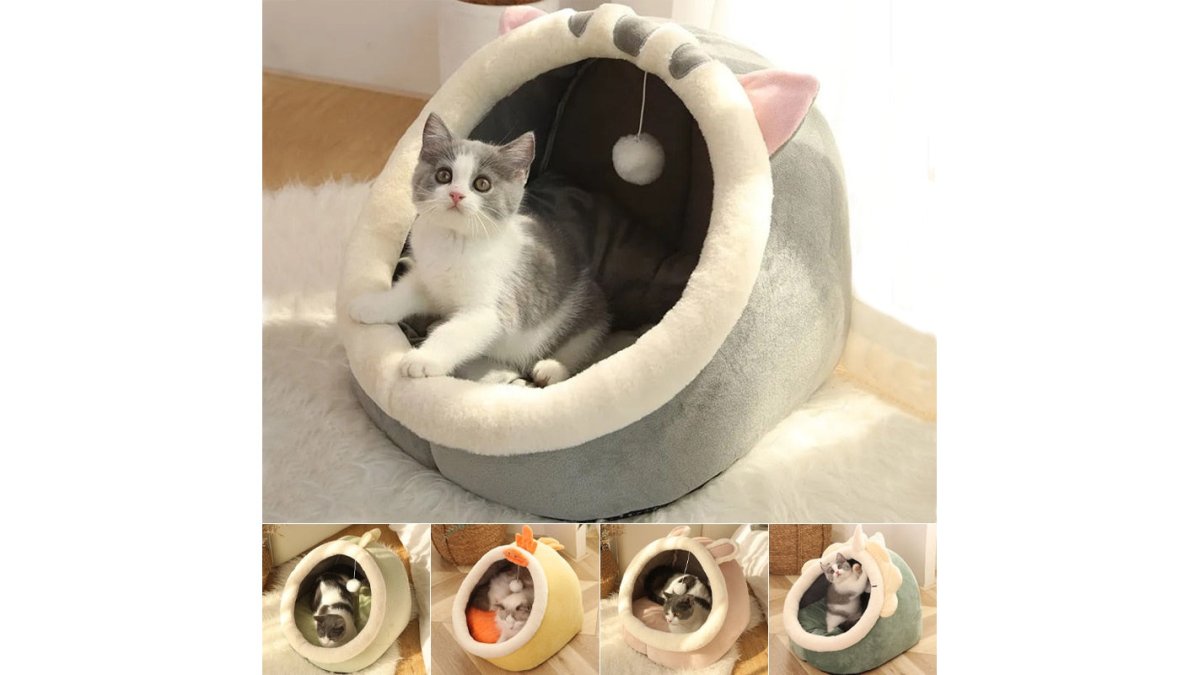
Sweet Cozy Cat Bed Cave – Washable →
When your cat finally settles in, stay still and let the moment pass quietly.
How to Make a Cat Feel Safe in a New Home (and Around a New Bed)
Safety in a new space comes from control, routine, and predictable hiding spots. The same rules apply to a new bed.
A cat that just moved in needs a smaller world at first. Confine your cat to one room for the first week. Then open up more space once eating, sleeping, and litter box use are steady.
Keep a daily routine, feed and play at the same times. Cats relax when they can predict what happens next.
Add enrichment so your cat has things to do besides worry: a cat tree, a window perch, and a few puzzle toys all help. Sarah H., one of our customers, put it simply: "I love this cat tree! My kitty spends hours playing and lounging on it."
Shelter transition is the hardest version. A shelter cat may need two weeks in one room before exploring further, move at that pace and the bed introduction gets much easier.
How to Use Pheromones for Cat Anxiety During the Adjustment Period
Pheromones are chemical signals cats deposit to mark territory as safe. Synthetic analogs copy that signal and can lower a shy cat's baseline arousal enough that a new bed stops reading as a threat. They are a support tool, not a solution, used correctly, they buy the calm minutes you need to run the introduction steps.
What the products actually are
The two categories you will see on shelves are:
- Feline facial pheromone analogs, modeled on the cheek and chin marks your cat leaves on furniture and doorframes. These are marketed for general calm and territorial comfort.
- Maternal appeasing pheromone analogs, modeled on the scent a nursing queen leaves to settle her kittens. These are marketed for stress from change and conflict.
Both come as plug-in diffusers, sprays, and wipes. Diffusers cover a room over time. Sprays and wipes are for spot treatment on objects and hands.
Diffuser protocol
- Plug the diffuser into the safe room at least 24 hours before the new bed arrives. The room needs time to reach a steady concentration.
- Keep the diffuser running continuously through the entire introduction, typically one to three weeks for a shy cat.
- Place it in an outlet with open air around it. Do not tuck it behind furniture, under a shelf, or next to a curtain.
- Match the diffuser to the room size on the label. An undersized unit in a large room will not reach useful concentration.
- Replace the refill on the schedule printed on the package. Most lose potency well before the bottle is visibly empty.
Spray and wipe protocol
- Spray the bed's exterior surface lightly, a few pumps, not a soak. Let it dry completely before your cat goes near it. A damp surface with a strong scent can read as a new threat and undo the work.
- Spray the inside of the carrier before any vet trip during the adjustment period. Let it dry first.
- Use wipes on your hands and forearms before handling your cat or the bed. This keeps your own scent from masking the pheromone signal.
- Do not spray directly on your cat. These products are designed for surfaces and air, not fur.
What to realistically expect
Pheromones do not sedate a cat or replace the slow introduction steps. What most practitioners report is a modest reduction in vigilance, a cat that comes out from under the bed a little sooner, or tolerates the new bed without flattening its ears.
That modest shift is exactly what you need. The introduction steps require your cat to be calm enough to explore. Pheromones help create that window. They will not create the outcome on their own.
Stacking pheromones with the rest of the plan
Use pheromones as one layer among several:
- Diffuser running in the safe room for the full adjustment period
- Scent swapping with your cat's own cheek and chin marks on the bed
- Treat tossing near the bed to build positive association
- Zero forced contact, no lifting, no placing, no cornering
If you skip the other layers, the diffuser alone will not carry the introduction.
When to call your vet
Talk to your veterinarian if your cat:
- Stops eating or drinking for more than 24 hours
- Hides continuously for more than two days without coming out to eat or use the litter box
- Shows new aggression toward familiar people or pets
- Has symptoms that could be medical, vomiting, diarrhea, straining in the litter box, or sudden weight change
A veterinarian can rule out medical causes and, if appropriate, discuss prescription options for anxiety. Pheromone products are not a substitute for that conversation.
feline pheromone product safety and use guidance
Sensory-Specific Bed Introduction: Matching the Bed to Your Cat
Matching the bed to your cat's preferred sleeping style cuts the adjustment period short, the step most guides skip entirely.
Watch where your cat already sleeps. Then match that shape:
- Under furniture or in corners: an enclosed cat house. The Sweet Cozy Cat Bed Cave has a semi-closed shape that fits a cat's hiding nature, with a removable double-sided pad.
- On top of furniture, curled tight: a semi-enclosed lounger. The Toast Bread Cat Bed comes in sizes from small to extra large, with a soft lamb wool and sponge build.
- Stretched out and exposed: an open mat or flat bed. The All-Season Semi-Enclosed Dog House comes in four sizes and is machine washable.
- In a box, always: a covered villa-style bed. The Enclosed Cat House is a fabric option built for cats.
Texture matters too: a cat that kneads soft blankets usually accepts a plush surface fast, while one that sleeps on hard floors may prefer a firmer pad at first.

Temperature and height matter as well. Cats seek warm, elevated spots. Place the new bed where your cat already naps, not where you want it to go.
Troubleshooting Bed Rejection: What to Try When Nothing Works
If your cat still avoids the bed after two weeks, the problem is usually placement, smell, or pressure. Work through these fixes in order.
| Problem | Likely Cause | Fix | Time to Try |
|---|---|---|---|
| Bed untouched for weeks | Wrong location | Move it to a current nap spot | 3-5 days |
| Cat sniffs then leaves | Lingering store smell | Wash and scent-swap again | 2-3 days |
| Cat approaches only when you are gone | Pressure from your presence | Place it and leave the room | 1 week |
| Cat sleeps beside it, not in it | Bed too open or too enclosed | Swap for the opposite style | 1 week |
| Cat uses it once, then stops | Something startled them there | Move to a quieter corner | 3-4 days |
Start with placement. Most rejections come down to a bed in a spot your cat never chose.
If smell is the issue, wash the cover with unscented detergent and repeat the scent swap. Store smells linger longer than most people expect.
Then remove yourself from the equation. Some shy cats will only explore a new object when no one is watching.
Common Mistakes That Slow Down Acclimation
Most slow acclimation comes from small, well-meaning mistakes. The most common:
- Placing the bed in a high-traffic area. Cats will not relax where people and noise keep moving.
- Washing the bed with scented detergent. Strong fragrance reads as a threat, not a comfort.
- Forcing contact. Picking up your cat and placing them in the bed sets you back days.
- Moving the bed around. Pick a spot and keep it there for at least a week.
- Skipping the safe room. Without a base of security, nothing new feels safe.
- Expecting speed. A shy cat may need two to three weeks. That is normal, not failure.
Frequently Asked Questions
Why is my cat afraid of their new bed?
Cats are territorial and rely on familiar scent to feel secure. A new bed carries unfamiliar smells, which signals change and potential threat to a shy cat. The bed's shape, texture, or location can also feel exposed. Rather than forcing contact, place the bed in a quiet corner and let your cat investigate at their own pace. Scent swapping with a blanket your cat already sleeps on speeds up acceptance considerably.
How long does it take for a cat to get used to a new bed?
Most cats warm up to a new bed within one to three weeks when introduction is gradual. Shy or recently adopted cats may need four to six weeks. Progress is not linear; a cat might sniff the bed for days before stepping in. Rushing the process by placing your cat inside the bed often resets trust. Watch for small wins like lingering near the bed or kneading the fabric.
Can I use catnip to encourage my cat to use a new bed?
Catnip can help, but it only works on cats that carry the genetic sensitivity to it, roughly 50 to 70 percent of cats. Sprinkle a small amount on the bed's removable pad rather than the outer shell so it is easy to refresh. If your cat ignores catnip, try silver vine or a treat tucked near the bed instead. Never rely on catnip alone; pair it with scent swapping and treat association for the best results.
Where is the best place to put a new bed for a nervous cat?
Place the bed in a quiet corner of a room your cat already frequents, ideally with a wall behind it and a clear view of the doorway. Avoid high-traffic areas, loud appliances, and spots near litter boxes or food bowls. A semi-enclosed bed works well because it mimics the hiding spots shy cats seek. If your cat hides under furniture, put the bed near that spot first, then gradually move it to the target location.