
Durable Cat Furniture for Apartments: 2026 Guide
Table of Contents
- What Makes Durable Cat Furniture Work in an Apartment
- Top Durable Cat Furniture Picks for Apartments
- How to Choose a Cat Tree for an Apartment
- Best Materials for Cat Scratching Posts
- Renter-Friendly and Space-Saving Design Features
- Cat Furniture Maintenance Tips for Small Spaces
- Conclusion
Last Updated: August 5, 2026
Finding durable cat furniture for apartments is harder than it looks. Most cat trees are built for suburban living rooms with plenty of floor space and zero landlord scrutiny. Apartment dwellers face different constraints: tight square footage, noise-sensitive neighbors, security deposits on the line, and decor standards that rule out anything resembling a carpeted monstrosity. At Furrygate.com, we've put together this guide to help you find furniture that actually works for small-space living with cats.
Quick Picks:
- Best Budget: Frisco Wicker Cat Tree with Wooden Condo ($79.99), compact, stylish, apartment-ready
- Best Mid-Range: Vesper V-High Base Cat Tree (~$160), modern aesthetic, multi-cat stable
- Best Premium: Tuft + Paw The Grove Cat Tree ($599-$749), furniture-grade, wobble-free, genuinely beautiful
- Best Renter-Friendly: K&H EZ Mount Window Bed (~$20-$50), zero floor footprint, no damage
- Best Natural Materials: Mau Lifestyle Cento Cat Tree (~$200-$300), handmade, sustainable, washable
What Makes Durable Cat Furniture Work in an Apartment
Durable cat furniture withstands daily scratching, climbing, and lounging without losing structural integrity, shedding material, or creating noise that travels through walls. In apartments, durability means staying wobble-free under an active cat, resisting fiber shedding, and holding up through multiple moves.
The biggest mistake apartment cat owners make is buying for aesthetics alone. A beautiful piece that tips when a cat launches off the top becomes a hazard. According to American Veterinary Medical Association guidelines on cat enrichment, cats need vertical territory and scratching surfaces as core behavioral needs. The furniture you choose has to perform.
Stability and Wobble-Free Construction
Wobble-free construction depends on three things: base width relative to height, post diameter, and hardware quality. Look for posts at least 4 inches in diameter for floor-standing towers, and check that assembly hardware uses machine screws rather than basic wood screws, which strip out over time. Heavy-duty bases with non-slip rubber feet are essential on apartment floors, particularly hardwood or laminate where vibration travels easily.
Floor Footprint vs. Vertical Territory
The real trade-off in apartment cat furniture is floor footprint versus vertical territory. A sprawling multi-level tower offers excellent enrichment but eats up 6 square feet of floor space in a 400-square-foot studio. The smarter approach is to prioritize height over width: a tall, narrow cat playground with stacked perches and a small base gives your cat vertical territory without consuming your living space.
Top Durable Cat Furniture Picks for Apartments
These five picks span different price ranges and apartment situations. None look like something rescued from a garage sale, and all hold up to real daily use.
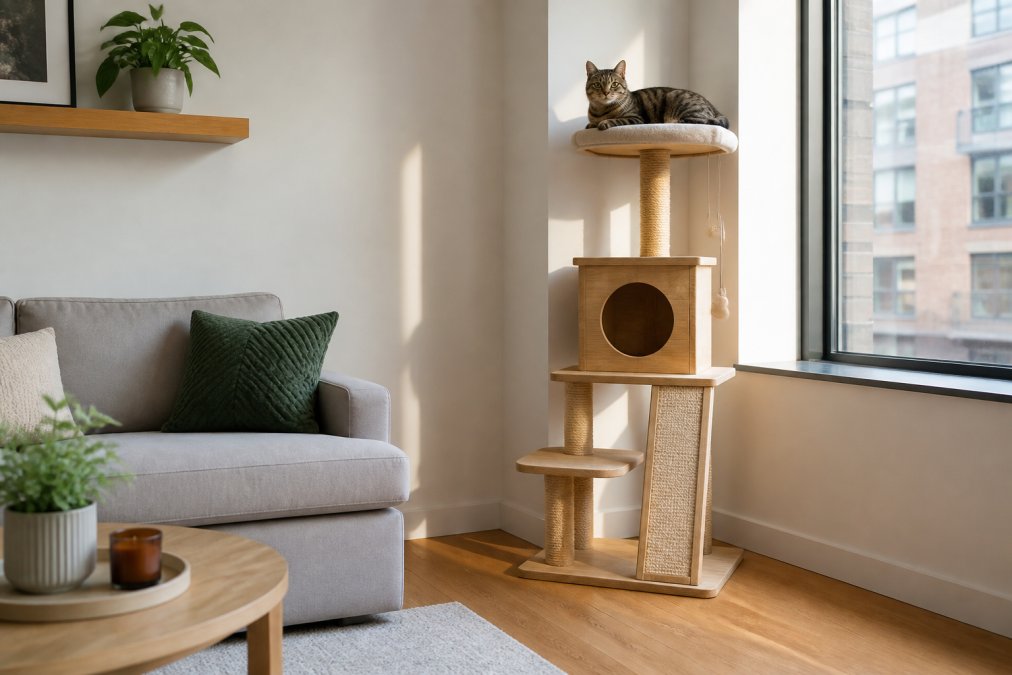
1. Frisco Wicker Cat Tree with Wooden Condo (~$79.99), Best Budget Pick
The Frisco Wicker Cat Tree delivers a wicker perch, solid wooden condo, sisal scratching post, sisal mat, and removable machine-washable cushions in a compact footprint that fits naturally into small spaces. It genuinely looks like furniture rather than a cat playground, blending with minimalist and bohemian decor.
Pros:
- Looks like furniture, not a cat playground
- Compact size suits smaller apartments
- Machine-washable cushions simplify cleaning
Cons:
- 25 lb weight limit rules out large cats
- Less strong for highly active multi-cat households
2. Vesper V-High Base Cat Tree (~$160), Best Mid-Range
The Vesper V-High Base features multiple sisal scratching posts, a cube tunnel, two elevated platforms, and removable memory foam cushions on every surface. Available in walnut, oak, red, and black finishes, it's designed to look like modern furniture. Memory foam holds its shape better than thin polyester padding, which matters for cats who spend significant time lounging. Stability is solid for multi-cat households.
Pros:
- Stable enough for multiple cats
- Memory foam cushions on all surfaces
- Modern geometric design suits contemporary apartments
Cons:
- Assembly instructions can be confusing
- Sisal rope posts may wear faster than sisal carpet versions
3. Mau Lifestyle Cento Cat Tree (~$200-$300), Best Natural Materials
The Mau Lifestyle Cento is handmade from sustainably sourced wood and wicker, with sisal-wrapped posts and plush machine-washable cushions. It supports cats up to 25 lbs and includes a large cave at the base for sleeping and hiding. Most components are replaceable, extending lifespan and reducing long-term ownership costs.
Pros:
- Handmade with sustainable, natural materials
- Replaceable components extend longevity
- Machine-washable cushions ease maintenance
Cons:
- Higher price point for the size
- Some cats dislike wicker textures
4. Tuft + Paw The Grove Cat Tree ($599-$749), Best Premium
The Grove is what happens when furniture designers take cat trees seriously. Built from premium plywood with high-quality veneer, it features a distinctive wood slat design providing both hiding spots and panoramic views. It comes largely pre-assembled, a genuine advantage for apartment dwellers. The structural integrity is exceptional and wobble-free.
Pros:
- Exceptional structural integrity, genuinely wobble-free
- Seamlessly matches modern home decor
- Pre-assembled for fast setup
Cons:
- Significant investment at $599-$749
- Overkill for single small cats with tight budgets
5. K&H EZ Mount Window Bed (~$20-$50), Best Renter-Friendly
The K&H EZ Mount Window Bed is the most renter-friendly option available. It mounts to any window using strong suction cups, holds cats up to 12 lbs, features plush microfiber lining, and folds flat for storage or moving. Zero floor footprint. No drilling. No deposit risk. For cats who love to watch birds or sunbathe, this provides enrichment requiring no permanent installation.
Pros:
- Zero floor footprint, ideal for studios
- No drilling or wall damage
- Foldable for easy storage and moving
Cons:
- 12 lb weight limit on most models
- Suction cups require periodic re-pressing
How to Choose a Cat Tree for an Apartment
Choosing the right durable cat furniture requires matching four variables: your cat's size and activity level, available floor space, lease restrictions, and aesthetic preferences.
Wall-Mounted vs. Floor-Standing Options
Wall-mounted cat perches maximize vertical territory without consuming floor space, but installation typically requires drilling into studs, which damages walls and risks your security deposit. Floor-standing cat trees avoid this entirely. A well-designed tower with a small base can occupy under 2 square feet of floor space while giving your cat 5-6 feet of vertical territory. For most renters, floor-standing is the safer choice.
Renter-Friendly Installation Methods
Renter-friendly installation means damage-free or minimal-damage approaches. According to U.S. Department of Housing and Urban Development tenant rights resources, landlords can legally deduct from security deposits for damage beyond normal wear and tear.
The safest approaches:
- Suction cup mounts (window beds, lightweight perches): zero wall contact
- Tension-mounted poles: floor-to-ceiling poles requiring no drilling
- Freestanding towers: no installation required
- Adhesive strips rated for weight: for very lightweight accessories only
Best Materials for Cat Scratching Posts
The best materials depend on your cat's scratching preference and your tolerance for maintenance.
Sisal vs. Carpet vs. Solid Wood
Sisal is the gold standard for scratching posts. It's a natural fiber cats instinctively prefer, shreds cleanly without leaving loose fibers across your apartment, and lasts significantly longer than carpet alternatives.
Carpet is the most common material on budget cat trees and the most problematic for small-space living. Carpet fibers shed, trap hair, and are difficult to clean thoroughly.
Solid wood scratching surfaces appeal to cats preferring harder texture. They're the easiest to clean, most durable over time, and most aesthetically neutral.
| Material | Durability | Hair Management | Cat Preference | Best For |
|---|---|---|---|---|
| Sisal rope | Good | Easy | High | Most cats, standard posts |
| Sisal carpet | Very good | Moderate | High | Broad scratching surfaces |
| Carpet | Poor-moderate | Difficult | Variable | Budget options only |
| Solid wood | Excellent | Very easy | Variable | Minimalist apartments |
Renter-Friendly and Space-Saving Design Features
Space-saving design in cat furniture isn't just about footprint. The best apartment cat furniture is modular, quiet, easy to move, and easy to clean.
Noise Reduction and Acoustic Dampening
A cat tree with hard plastic components or thin MDF panels transmits vibration noise directly to floors and walls when a cat lands, climbs, or scratches. Look for furniture with rubber feet or felt pads on the base, which absorb impact vibration before it transfers to the floor. Solid wood construction dampens sound better than hollow MDF. Fabric-wrapped platforms absorb landing impact rather than reflecting it.
Moving, Disassembly, and Modular Design
Apartment dwellers move more often than homeowners. Cat furniture that disassembles cleanly and reassembles without losing structural integrity is worth paying for. The Frisco and Vesper options both disassemble into manageable components. The Grove arrives pre-assembled and is light enough for two people to carry. The K&H Window Bed is the clear winner for moving logistics: fold it, toss it in a bag, done.
Cat Furniture Maintenance Tips for Small Spaces
Maintaining durable cat furniture in a small apartment requires a consistent routine. Hair accumulation, sisal fiber shedding, and cushion odor compound quickly in limited square footage.
Cleaning and Hair Management
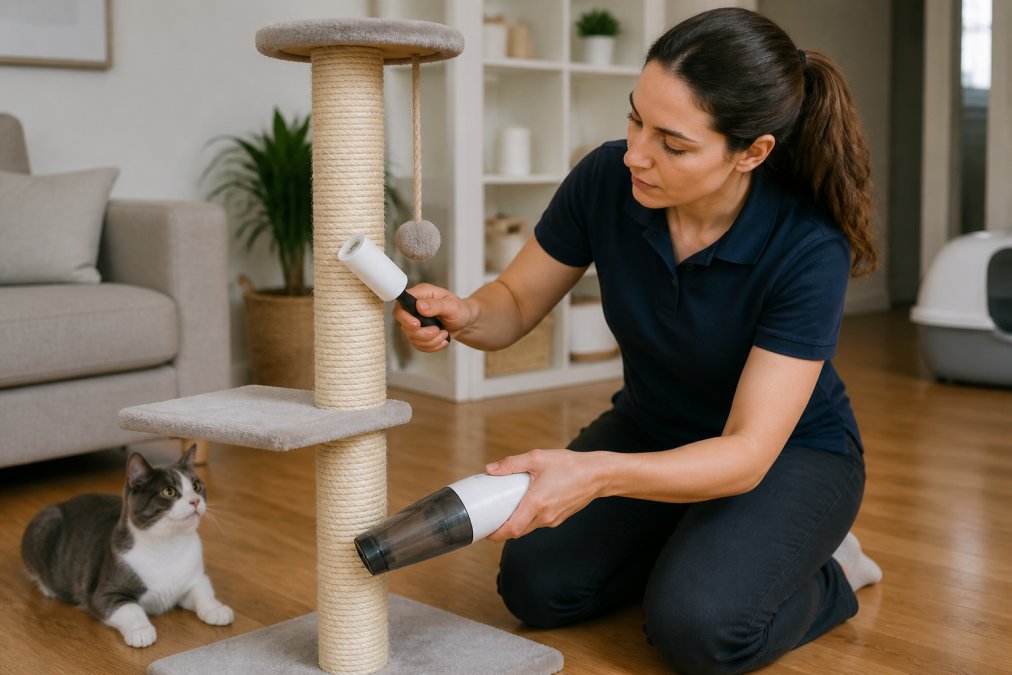
Weekly maintenance prevents buildup that makes deep cleaning a multi-hour project. A handheld vacuum with an upholstery attachment handles loose hair on fabric platforms in under five minutes. For sisal posts, a stiff brush removes accumulated debris without damaging fiber. Removable, machine-washable cushions are a significant practical advantage in small spaces.
A consistent cleaning schedule:
- Weekly: vacuum fabric platforms and perches
- Weekly: lint-roll cushion covers
- Monthly: brush sisal posts with a stiff bristle brush
- Monthly: wipe down wooden or MDF surfaces with a damp cloth
- Every 3 months: machine-wash removable cushion covers
- Every 6 months: inspect hardware and tighten any loose screws
According to American Society for the Prevention of Cruelty to Animals guidance on cat environmental enrichment, maintaining clean, functional scratching surfaces is important for redirecting scratching behavior away from furniture and walls, which is especially critical in rental units.
DIY Renter-Friendly Modifications
Replacing sisal rope: When sisal rope wears through on a post, re-wrap it yourself with natural sisal twine from a hardware store. This costs under $10 and extends a post's life by 12-18 months.
Adding felt pads: Stick adhesive felt pads to the base of any cat tree to reduce floor scratching and noise transmission. These cost under $5 at any hardware store and make a noticeable difference on hardwood floors.
Stabilizing wobbly bases: If a floor-standing tree develops a slight wobble, a non-slip rug pad cut to the base dimensions adds both grip and stability without permanent modification.
Cat Furniture Comparison at a Glance
| Product | Price | Best For | Floor Footprint | Renter-Friendly |
|---|---|---|---|---|
| Frisco Wicker Cat Tree | $79.99 | Budget, single cat | Small | Yes |
| Vesper V-High Base | ~$160 | Multi-cat, mid-range | Moderate | Yes |
| Mau Lifestyle Cento | ~$200-$300 | Eco-conscious, natural materials | Moderate | Yes |
| Tuft + Paw The Grove | $599-$749 | Premium, modern decor | Moderate | Yes |
| K&H EZ Mount Window Bed | ~$20-$50 | Studios, small cats | Zero | Best in class |
Finding the right durable cat furniture for apartments is ultimately about matching your cat's behavioral needs to your living situation's real constraints. The picks above cover every budget and situation, from the zero-footprint K&H window bed to the furniture-grade Grove. At Furrygate.com, our Semi-Closed Cat Bed with Universal Cover ($12.99) is also worth adding alongside any of these trees: it gives your cat a dedicated sleeping nest that keeps them off your sofa and reduces the overall maintenance burden. Shop Pet Essentials Now and give your cat the enrichment they need without compromising the apartment you love.

Frequently Asked Questions
What is the best cat furniture for small apartments?
The best durable cat furniture for small apartments combines a compact floor footprint with vertical territory. Multi-level towers with wall-mounted cat perches, window beds like the K&H EZ Mount, and slim-profile cat trees such as the Frisco Wicker model all work well. Look for modular designs with sisal scratching posts, a weight limit that matches your cat, and removable cushions for easy cleaning. Pieces that resemble actual furniture keep your space clutter-free and deposit-safe.
Are wooden cat trees more durable than carpeted ones?
Solid wood and premium plywood cat trees generally outlast carpet-covered MDF models. Carpet traps hair, absorbs odors, and wears down faster under heavy scratching. Wood structures with sisal wrapping offer better structural integrity, are easier to wipe clean, and hold up under the weight of large or active cats. That said, carpet traction on platforms does give cats secure footing, so the best options combine a solid wood frame with sisal scratching surfaces and removable fabric cushions.
How do you keep cat furniture from taking up too much space?
Prioritize vertical space utilization over floor footprint. Wall-mounted cat perches, corner cat trees, and window-mounted beds all add enrichment without consuming square footage. Choose multi-functional furniture like ottomans with built-in scratching surfaces or side tables that double as cat condos. Modular designs let you reconfigure or remove sections as your space changes. A damage-free anchoring system, such as tension-mounted or suction-cup options, keeps installation renter-friendly.
What materials are most durable for cat scratching furniture?
Sisal rope and sisal carpet are the top choices for cat scratching posts because cats prefer their rough texture and they resist shredding better than regular upholstery. Natural sisal carpet lasts longer than sisal rope under intense scratching. Solid wood posts provide the strongest structural base. Avoid faux fur or standard carpet on scratching surfaces since they wear quickly and attract hair. Look for replaceable scratching components so you can refresh the post without replacing the entire cat tree.
How can I make my apartment cat-friendly without clutter?
Choose cat furniture with a minimalist aesthetic that matches your existing decor. Look for neutral colors, clean lines, and natural materials like wood and wicker rather than bright carpet-covered towers. Wall-mounted shelves and window beds add vertical territory with zero floor footprint. A semi-closed cat bed, like the Four Seasons Nest available at Furrygate.com for $12.99, tucks neatly into a corner and serves as both a cozy sleeping spot and a design-forward accent piece.
This article was written using GrandRanker