

DIY Enrichment Activities for Aggressive Chewers
Table of Contents
- Why Enrichment Matters for Aggressive Chewers
- Safe DIY Dog Toys for Heavy Chewers: Materials That Hold Up
- Mental Stimulation for Power Chewers: Puzzle Feeders and Foraging
- Frozen Treat Ideas for Dogs: Long-Lasting Chew Alternatives
- Indoor Agility and Obstacle Courses for High-Energy Dogs
- Scent Work and Nose Games: Tap Into Natural Instincts
- Supervision Protocols and When to Stop
- Post-Chew Cleanup and Toy Maintenance
- Combining DIY Projects With Durable Store-Bought Options
- Frequently Asked Questions
Last Updated: October 1, 2026
Why Enrichment Matters for Aggressive Chewers
Aggressive chewing isn't a behavior problem, it's a sign your dog needs more mental stimulation and physical outlets. Heavy chewers and super chewers destroy toys because they're bored, anxious, or burning energy with nowhere to direct it. DIY enrichment activities for aggressive chewers address the root cause instead of just replacing destroyed toys.
When you provide the right mental stimulation and foraging opportunities, destructive chewing drops dramatically. Your dog channels that natural instinct into appropriate behaviors. The best part? You don't need expensive toys. Household items and simple projects work just as well, sometimes better, than store-bought options.
At My Store, we understand that aggressive chewers need durable solutions. This guide walks you through proven DIY enrichment activities that keep power chewers engaged for hours.
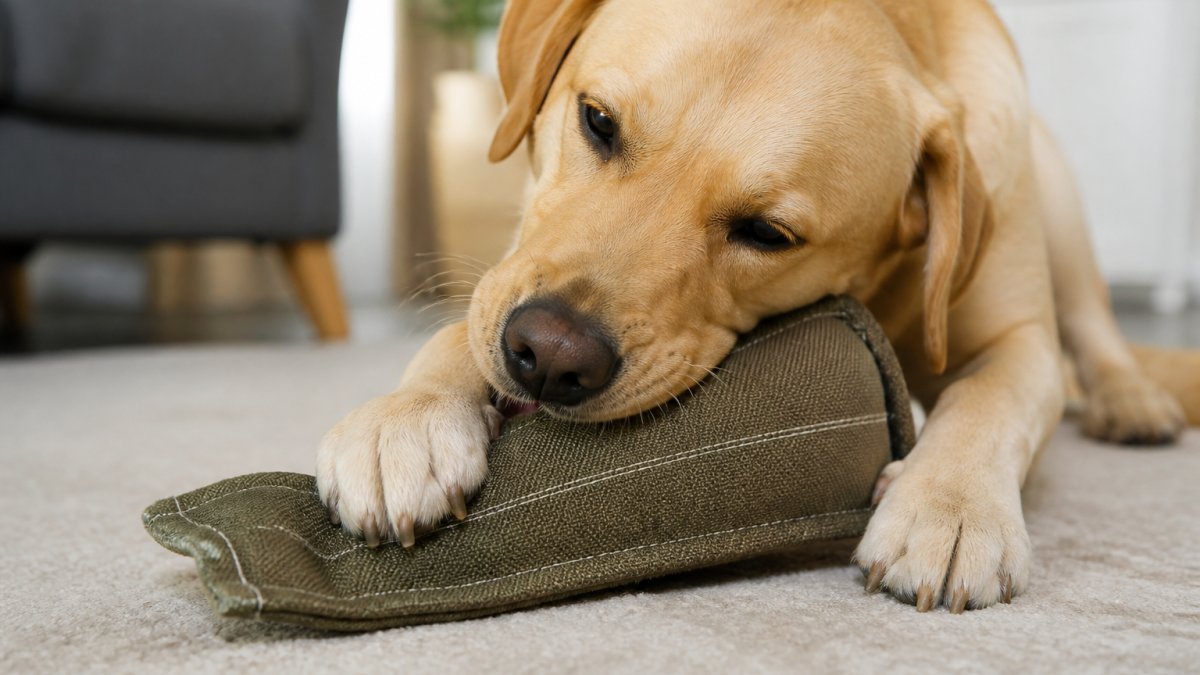
Safe DIY Dog Toys for Heavy Chewers: Materials That Hold Up
Material safety testing for aggressive chewers
Before any DIY toy reaches your dog's mouth, you need a three-step safety protocol. Generic durability testing isn't enough for power chewers, you must test for toxicity and ingestion risk.
Step 1: Toxicity screening
Check every material against the ASPCA Animal Poison Control Center database or call them at (888) 426-4435 if you're unsure. Materials safe for humans aren't always safe for dogs. For example, walnut shells (sometimes used in DIY toys) are toxic to dogs and can cause tremors or seizures. Macadamia nuts are similarly dangerous.
For fabric, dyes matter. Old clothing dyed with synthetic dyes may leach chemicals when chewed. Wash used fabrics in hot water multiple times and inspect for color bleeding. If dye still comes off in water, don't use it.
For adhesives, never use standard craft glue, super glue, or epoxy. These are toxic if ingested. If your DIY toy requires binding, use food-grade silicone sealant or skip the adhesive entirely and rely on stitching or knotting.
Step 2: Ingestion risk assessment
Aggressive chewers don't just gnaw, they tear, shred, and swallow. Test whether your material breaks into small pieces that could cause blockages.
Rub the material vigorously with your hands for 30 seconds. Does it shed fibers? Does it splinter? Does it flake? If yes, your dog will ingest those pieces. Blockages from toy material are one of the most common emergency surgeries in heavy chewers, costing $2,000-$5,000.
For rope toys, unravel a small section. If individual strands separate easily, the toy will shed fibers during chewing. Cotton rope is safer than synthetic rope because cotton breaks down in the digestive system, but it still poses risk. Only use rope toys under direct supervision.
For wood or natural materials, sand all surfaces smooth. Splinters are a serious ingestion hazard. Test by running your hand across the material, if you feel any rough spots, sand more.
Step 3: Durability testing under chew intensity
Before your dog touches it, simulate aggressive chewing. Pull, twist, and bend the toy with force for 60 seconds. Try to tear seams apart. Attempt to break off pieces.
If you can damage it, your dog will. If you can't damage it easily, your dog still might, they have stronger jaw pressure than humans. The goal is to identify weak points before they become choking hazards.
Look specifically for:
- Seams that separate or fray
- Stuffing that pulls out in chunks
- Materials that shred into long strands (high blockage risk)
- Small parts that break off (choking hazard)
- Weak points where two materials meet
If you find any of these, either reinforce the weak point or discard the toy design.
Non-toxic materials your power chewer can safely destroy
Canvas is durable and non-toxic. Old jeans, canvas bags, and canvas scraps all work. Wash them first to remove any chemicals or dyes.
Cotton rope is safe if you supervise play closely. Many dogs swallow rope, which causes blockages, so only use rope toys when you're watching. Knot the ends so they don't unravel. Limit rope toy sessions to 10-15 minutes maximum.
Natural rubber and untreated wood work for some chewers. Avoid painted wood, treated wood, or anything with splinters. Pine and cedar are toxic to dogs, skip them entirely. Birch, apple wood, and willow are safer natural options if properly sanded.
Fleece and old towels work for non-aggressive chewers but are risky for power chewers. These materials shred easily and can cause blockages. If you use them, supervise constantly and retire the toy at the first sign of tearing.
Never use:
- Plastic bags or plastic wrap (choking and blockage)
- Coated fabrics with toxic dyes (toxicity)
- Foam or foam padding (blockage)
- Anything with glue or adhesive (toxicity)
- Small parts that can break off (choking)
- Treated or painted materials (toxicity)
- Synthetic rope (blockage risk)
- Materials that shed fibers easily (blockage)
Your aggressive chewer will test every inch of a toy. Choose materials that can withstand serious chewing without breaking into dangerous pieces or leaching toxins.
Mental Stimulation for Power Chewers: Puzzle Feeders and Foraging
DIY puzzle feeders using household items
A puzzle feeder slows eating and engages your dog's problem-solving skills. Wrap kibble or treats in a towel and roll it up. Your dog unrolls it to find the food. This simple foraging game keeps them busy for 10-20 minutes.
Muffin tins work as puzzle feeders too. Put treats in each cup and cover them with tennis balls. Your dog lifts the balls to find the treats underneath.
Water bottles inside socks create noise and challenge. Put a plastic water bottle in a sock, tie it closed, and fill it with kibble. Your dog shakes and pounces to get the food out. Supervise this one, dogs sometimes chew the sock.
Ice cube trays filled with peanut butter or wet food and frozen solid offer mental stimulation and cooling relief. Your dog licks and works to get the frozen treat out.
Scatter feeding and snuffle mat alternatives
Scatter feeding is exactly what it sounds like: scatter kibble across the floor or yard and let your dog forage. This taps into natural instincts and keeps them busy for 30 minutes or more. Grass hides kibble better than bare floors.
A snuffle mat is a DIY foraging mat made from fabric scraps. Take an old towel or mat with a rubber backing. Cut strips of old fabric and tie them through the mat. Hide kibble or treats in the strips. Your dog sniffs and digs to find them.
No mat? Use a blanket or towel bunched up on the floor. Hide treats inside the folds. Your dog unrolls and searches.
Cardboard boxes filled with crumpled paper and hidden treats work for foraging too. Your dog tears through the paper to find the food. This is messy but highly engaging. Clean up after to avoid ingestion of paper pieces.
Frozen Treat Ideas for Dogs: Long-Lasting Chew Alternatives
Frozen treats keep aggressive chewers occupied longer than regular toys. They also soothe sore gums and cool dogs down on hot days.
Freeze broth in ice cube trays. Beef or chicken broth with no onion or garlic works. Your dog licks the frozen cubes for 15-30 minutes.
Peanut butter frozen in a Kong-style toy lasts hours. Stuff the toy with peanut butter, freeze it overnight, and give it to your dog. Make sure the peanut butter is xylitol-free, which is toxic to dogs (Updated Safety Warning on Xylitol: How to Protect Your Pets).
Yogurt frozen in ice cube trays offers probiotics and a cool treat. Plain, unsweetened yogurt only.
Meat broth poured over kibble and frozen solid creates a long-lasting chew. Your dog works through the frozen layer to reach the kibble inside.
Frozen wet food in a silicone mold keeps heavy chewers busy. Freeze dog-safe wet food or bone broth. The frozen block takes 30-45 minutes to consume.
Indoor Agility and Obstacle Courses for High-Energy Dogs
High-energy aggressive chewers need physical outlets, not just mental ones. Indoor agility burns energy and reduces destructive behavior.
Set up simple obstacles in your living room or basement:
- Cushions to jump over
- Blankets draped over chairs to crawl under
- Cones or household items to weave around
- Stairs for climbing (if safe for your dog's joints)
- Tunnels made from PVC pipe or fabric
Run your dog through the course 2-3 times daily. Start slow and use treats to guide them. Build up speed and complexity as they learn.
Tug toys designed for interactive play work during these sessions. My Store's Bite-Resistant Cartoon Pet Dog Toy in canvas material holds up to intense tugging and play.
Bite-Resistant Cartoon Pet Dog Toy – Durable Chew Toy →

Jump exercises, controlled running, and obstacle navigation tire out power chewers fast. A tired dog is less likely to destroy your furniture.
Scent Work and Nose Games: Tap Into Natural Instincts
Dogs naturally use their noses to explore and solve problems. Scent work games engage this instinct and provide serious mental stimulation.
Hide treats around your home and let your dog find them. Start easy, hide treats in obvious spots. Gradually hide them in harder places: under blankets, inside boxes, behind furniture.
Scent games with essential oils work too. Put a drop of dog-safe oil (like chamomile) on a cotton ball. Hide it in a box with holes poked in the sides. Your dog sniffs to find the scent.
Nose work competitions use specific scents and hiding spots. You don't need to compete formally, just play at home. Hide a scented toy or treat and encourage your dog to "find it."
Sniff walks outside engage natural instincts better than regular walks. Let your dog lead and sniff everything. Stop rushing them. A 15-minute sniff walk tires a dog as much as a 30-minute regular walk.
Supervision Protocols and When to Stop
Matching supervision intensity to toy durability
Not all DIY toys require the same level of supervision. The key is matching your monitoring intensity to the toy's durability rating and your dog's chew intensity.
Extreme-durability toys (canvas, natural rubber, thick rope): These toys can handle 10-15 minutes of unsupervised play once you've confirmed they're intact. Check them before and after each session for damage. If no damage appears after three sessions, you can extend unsupervised time to 20-30 minutes. Never leave them out overnight or when you're away for more than 2 hours.
Moderate-durability toys (towels, fleece, thin rope, cardboard): These require active supervision during every play session. Sit within arm's reach and watch for signs of shredding or piece separation. Limit sessions to 10-15 minutes. Remove the toy immediately if it shows any damage.
Low-durability toys (frozen treats, puzzle feeders, scent games): Supervise continuously. These toys are designed to be destroyed or consumed, so your job is to prevent your dog from swallowing large chunks or choking. Stay within reach and monitor swallowing patterns.
Real-time monitoring checklist
During supervised play, watch for these specific behaviors and physical signs:
Chewing patterns that signal danger:
- Rapid, frantic chewing (sign of overstimulation or anxiety)
- Grinding or crunching sounds (toy is breaking apart)
- Your dog shaking the toy violently (sign of aggressive destruction)
- Your dog swallowing frequently or gulping (pieces are being ingested)
- Drooling excessively (could indicate choking or distress)
Physical toy damage you can see:
- Visible tears or holes opening up
- Stuffing coming out
- Seams separating
- Pieces breaking off or becoming loose
- Color change or material degradation
- Toy becoming noticeably smaller or thinner
Stop play immediately if:
- Your dog starts coughing, gagging, or choking
- Pieces come off the toy
- Your dog seems stressed, anxious, or overstimulated
- The toy is visibly falling apart
- Your dog's breathing changes or becomes labored
- Your dog vomits or shows signs of distress
- The toy becomes small enough to be a choking hazard
Intervention timing and toy retirement
Don't wait for obvious damage to retire a toy. Use a "three-strike" rule: if a toy shows damage on three separate play sessions, retire it permanently. This prevents the situation where a toy fails catastrophically during unsupervised time.
For frozen treats and puzzle feeders, retire them after 3-4 weeks of regular use. Ice crystals and repeated freezing break down materials, making them unsafe. The cost of replacing a frozen treat toy ($2-$5) is far less than an emergency vet visit.
For rope toys, retire them at the first sign of fraying. Don't attempt repairs, the repair won't hold under aggressive chewing, and you'll end up with a toy that fails unpredictably.
For canvas and fabric toys, retire them when holes are larger than a quarter-inch or when stuffing is visible. At this point, your dog can ingest material faster than you can remove it.
Managing anxiety-driven versus boredom-driven chewing
Aggressive chewing isn't always about boredom. Some dogs chew aggressively when anxious or stressed. Supervision helps you identify which type your dog has.
If your dog chews frantically, paces between toys, or seems unable to settle, they may be anxious rather than bored. In this case, high-energy enrichment (indoor agility, tug toys) can actually increase stress. Switch to calming activities: scent work, frozen treats, and quiet puzzle feeders. Consider consulting a veterinary behaviorist if anxiety-driven chewing is severe.
If your dog chews methodically, focuses on one toy for extended periods, and seems content, they're likely bored and need more mental stimulation. Rotate toys, add new DIY projects, and increase enrichment variety.
Rotation and refresh schedule
Rotate toys to keep them fresh and prevent boredom. Put some away for a week, then bring them back. Your dog treats them like new toys, which extends their lifespan and maintains engagement.
For aggressive chewers, rotate every 3-5 days. Keep 4-6 toys in active rotation and 3-4 in storage. This prevents toy fatigue (where your dog loses interest in all available toys) and gives you time to inspect stored toys for damage before reintroducing them.
Never leave aggressive chewers alone with toys that could break apart or cause choking. Crate toys or put them away when you're not home. A dog left unsupervised for 8 hours with a moderately durable toy can cause serious damage and ingest dangerous amounts of material.
Post-Chew Cleanup and Toy Maintenance
DIY toys need maintenance. Check them after every play session for damage.
Wash fabric toys weekly. Use warm water and mild soap. Dry completely before giving back to your dog. Moisture breeds bacteria.
Inspect rope toys for fraying. If rope is coming apart, retire the toy. Don't try to fix it, the fix won't hold.
Remove stuffing if it comes out. Don't let your dog ingest it. Restuff with safe materials or discard the toy.
Freeze-damaged toys after a few weeks. Ice crystals break down materials. Replace frozen treats regularly.
Store toys in a dry place. Mold and mildew grow on damp toys. Keep them in a bin or basket away from moisture.
Replace toys every 2-4 weeks depending on chew intensity. Aggressive chewers wear out even durable toys. Rotation and replacement cost less than emergency vet visits.
Combining DIY Projects With Durable Store-Bought Options
DIY enrichment activities work best alongside quality store-bought toys. The combination keeps your aggressive chewer engaged without constant DIY projects.
Look for toys made from durable materials like canvas or natural rubber. Avoid toys with plastic parts that break off easily. Heavy chewers destroy soft plush toys in minutes, skip them.
My Store's Bite-Resistant Cartoon Pet Dog Toy is designed for exactly this purpose. Made from canvas, it withstands serious chewing and lasts weeks instead of days. At just $14.98, it's affordable enough to keep several on rotation.
Rotate between DIY and store-bought toys. This prevents boredom and gives you time to make new DIY projects. Your dog gets variety without constant work from you.
Frozen treats, puzzle feeders, and scent work complement durable chew toys perfectly. Together, they address every type of enrichment your aggressive chewer needs: mental stimulation, physical exercise, and safe outlets for natural chewing instincts.
Aggressive chewing frustrates pet parents, but it's solvable with the right approach. DIY enrichment activities for aggressive chewers cost less than replacing destroyed furniture and toys. Start with simple projects like frozen treats and puzzle feeders. Add scent work and indoor agility as your dog masters the basics.
My Store makes it easy to combine DIY projects with durable, affordable toys. Shop our selection of pet essentials designed to handle power chewers and keep your dog engaged for hours. Get started with My Store.
Frequently Asked Questions
What are the best household items for DIY enrichment activities for aggressive chewers?
Safe household items include old towels rolled tightly and knotted at the ends, muffin tins filled with treats and covered with tennis balls, cardboard boxes for shredding (under supervision), and plastic water bottles inside old socks. Always inspect items for loose parts, sharp edges, or small pieces that could be swallowed. The key is choosing items durable enough to withstand aggressive chewing without splintering or breaking apart into ingestion risks.
How do I create mental stimulation for power chewers at home?
Mental stimulation for power chewers works best through puzzle feeders, scent work, and problem-solving activities. Fill a muffin tin with treats and cover each cup with a tennis ball, hide treats in a towel rolled up tightly, or create a snuffle mat using an old blanket with treats tucked into the folds. Rotate activities daily to prevent boredom. These cognitive exercises tire aggressive chewers mentally, often reducing destructive chewing behavior more effectively than physical exercise alone.
Are frozen treats safe for aggressive chewers?
Frozen treats can be excellent for aggressive chewers when made safely. Freeze low-sodium broth in ice cube trays, blend plain yogurt with mashed banana and freeze, or freeze wet food in a Kong toy. These frozen enrichment options soothe sore gums while providing long-lasting engagement. Always supervise frozen treat sessions and remove any toy if pieces begin breaking off. Avoid freezing anything with xylitol, chocolate, grapes, or onions.
How long should I supervise my dog during DIY enrichment activities?
Supervise aggressive chewers for the entire duration of any DIY enrichment activity, especially the first few times. Watch for signs of ingestion risk like excessive drooling, gagging, or pieces being swallowed. Most dogs settle into focused chewing after 5-10 minutes, but stay nearby. Remove the toy immediately if it shows signs of falling apart, splintering, or if your dog seems distressed. Never leave aggressive chewers alone with DIY toys.