

Best Durable Toys for Aggressive Chewers
Table of Contents
- What Makes a Toy Right for Aggressive Chewers
- Safe Materials for Aggressive Dog Chewers
- Top Durable Toys for Power Chewers: Our Picks
- How to Choose the Right Size Chew Toy
- Signs a Dog Toy Is Unsafe
- Preventing Destructive Chewing Behavior
- Conclusion
Last Updated: August 12, 2026
What Makes a Toy Right for Aggressive Chewers
A toy designed for aggressive chewers must withstand intense jaw pressure without breaking apart or splintering. Standard toys fail within minutes in a power chewer's mouth, creating choking hazards and wasting money on replacements.
Material selection is critical. Heavy-duty toys use tear-resistant compounds like natural rubber, reinforced nylon, and proprietary elastomer blends that flex under pressure rather than snap. Toys that shatter release small pieces your dog can swallow, escalating from inconvenience to veterinary emergency.
The best durable toys combine three qualities: material density that resists puncture, shape design that prevents choking, and enrichment value that maintains engagement. A toy that lasts six months but bores your dog after two weeks gets abandoned, and a bored power chewer destroys your furniture instead.
This guide from My Store covers the science of toy selection, real product options that survive aggressive chewing, and the decision framework for matching toys to your dog's chewing intensity.
Safe Materials for Aggressive Dog Chewers
The material you choose determines whether a toy survives or becomes a hazard.
Natural rubber is the gold standard for power chewers. It's non-toxic, FDA-compliant, and flexes under bite force rather than cracking. Thicker rubber resists puncture better than thin rubber, so quality toys feel substantial in your hand.
Reinforced nylon works well for consistent chewers. The textured surface appeals to dogs' natural instincts and provides long-lasting engagement. The tradeoff: nylon can shed small particles under extreme aggression, so supervision matters more than with solid rubber.
Proprietary elastomer blends (like West Paw's Zogoflex material) offer middle-ground performance. These are engineered to be flexible yet durable, often BPA-free and phthalate-free. They cost more upfront but frequently outlast cheaper alternatives.
Avoid toys made from soft plastic, thin rubber, or materials with glued-on components. These fail under aggressive chewing and can release small pieces that become choking hazards. Squeakers or rattles should be sewn in safety pouches, not glued.
Food-grade materials matter. A toy labeled food-grade has been tested for toxicity and won't leach harmful chemicals into your dog's saliva during extended chewing.
Top Durable Toys for Power Chewers: Our Picks
The following toys have proven track records with aggressive chewers. The best choice depends on your dog's chewing style and preferences.
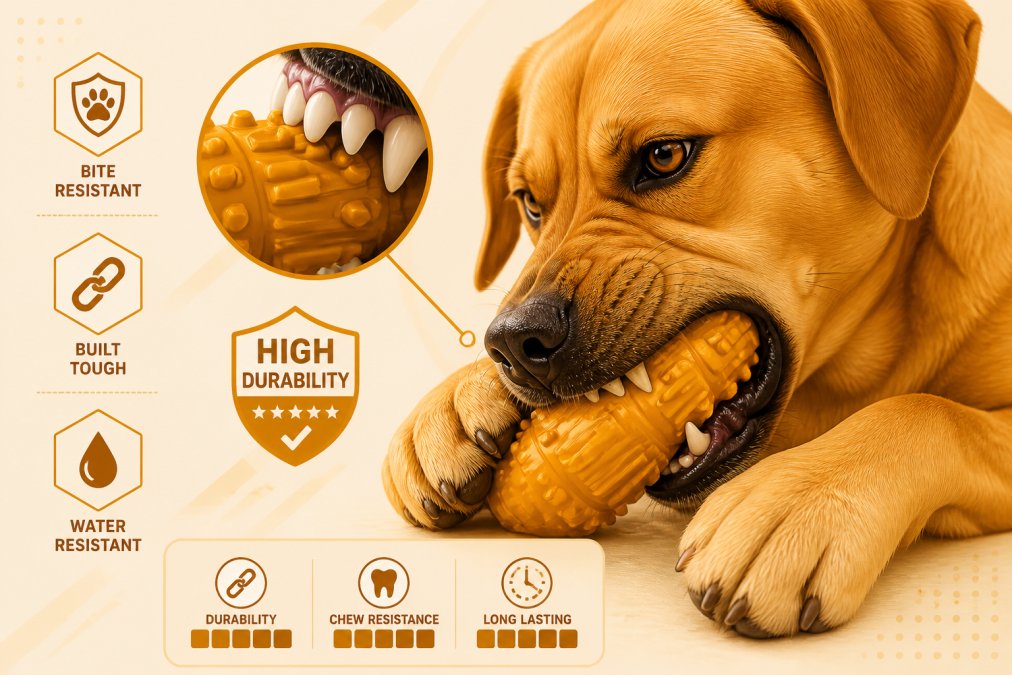
KONG Extreme: Natural Rubber Durability
KONG Extreme is built from KONG's most durable rubber formula for power chewers. The unpredictable bounce adds mental stimulation, and the hollow center allows treat-stuffing, turning passive chewing into an interactive puzzle. This engagement reduces boredom-driven destructive behavior.
Dogs with consistent chewing habits often keep a KONG Extreme intact for weeks or months. The rubber doesn't fragment, and the toy doesn't become a choking hazard even after extended use. Sticky treats can be difficult to clean out once dried, requiring soaking or a dishwasher cycle.
Pricing starts at $8.00 and scales to $25.99 depending on size. The toy floats, adding value for water play.
Nylabone Dura Chew: Textured Nylon Strength
Nylabone Dura Chew uses the company's toughest nylon material, designed to withstand extreme chewing without splintering. The textured surface with dental ridges appeals to dogs' natural urge to gnaw while helping clean teeth and control plaque buildup.
The straightforward bone or stick shape makes supervision easier, and there are no small removable components. The nylon is infused with flavor (bacon, chicken, peanut butter, or maple wood), maintaining engagement over time.
Nylabone Dura Chew performs well for moderate-to-aggressive chewers. The material resists tearing, though very determined power chewers may eventually wear through it. When that happens, the toy should be replaced because small nylon particles can accumulate in your dog's digestive system.
Pricing ranges from $3.99 to $16.19, making this one of the most affordable options. The toy is made in the USA.
GoughNuts Original Ring: Indestructible Design
GoughNuts features a two-layer safety system: a black exterior with a red interior layer that shows through when the toy has been worn to a critical point. This built-in indicator tells you exactly when replacement is necessary.
The ring shape is easy for dogs to grip and prevents accidental swallowing. Made from natural rubber compounds, it floats and is backed by a replacement guarantee if your dog destroys it.
GoughNuts Original Ring genuinely performs for extreme power chewers. Dogs that destroy standard toys within days often keep a GoughNuts ring intact for months. The safety indicator system removes anxiety about whether the toy is still safe.
Pricing ranges from $20.00 to $30.00 depending on size. This premium reflects the engineering and replacement guarantee.
West Paw Zogoflex Tux: Eco-Friendly Durability
West Paw Zogoflex Tux combines durability with environmental responsibility. Made from Zogoflex, a proprietary elastomer material that's BPA-free, latex-free, phthalate-free, and 100% recyclable. The design is stuffable for extended engagement.
The material is pliable and bouncy, flexing under bite pressure while resisting puncture. The toy is dishwasher safe and floats.
West Paw reports that Zogoflex toys withstand aggressive chewing without fragmenting. Pricing ranges from $23.95 to $43.72, reflecting the material science and eco-friendly manufacturing.
One limitation: treats can be difficult to remove once dried inside the toy, particularly with sticky fillings.
Benebone Wishbone: Flavored Nylon Chew
Benebone Wishbone uses super-strong nylon infused with real food-grade flavors like bacon, peanut butter, chicken, and maple wood. The curved, paw-friendly shape makes it easy for dogs to grip during chewing.
The nylon material is durable for aggressive chewers, and deep grooves enhance flavor release, keeping dogs interested longer. Made in the USA with no squeakers or stuffable cavities.
Dogs with consistent chewing habits often keep a Benebone Wishbone intact for weeks. Pricing ranges from $10.87 to $17.98, making it mid-range. The flavor variety appeals to dogs with specific taste preferences.
Benebone Wishbone is not edible, so small pieces that break off should not be swallowed. Very aggressive chewers may eventually wear through it, requiring replacement.
My Store Bite-Resistant Waterproof Mat: Multi-Purpose Protection
My Store's Bite-Resistant Waterproof Mat serves a different purpose than traditional chew toys, it's a protective surface that doubles as a chewing outlet. The mat combines durability with practicality, ideal for power chewers needing both enrichment and a designated chewing zone.
The waterproof surface prevents liquid spills from damaging flooring, while the bite-resistant structure withstands aggressive chewing without tearing. It works indoors and outdoors.
At $22.99, this product offers exceptional value. Rather than replacing destroyed toys every few weeks, you get a durable surface serving multiple functions: a chewing outlet, a comfortable resting spot, and floor protection.
How to Choose the Right Size Chew Toy
Size selection determines both safety and engagement. A toy that's too small becomes a choking hazard; a toy that's too large frustrates your dog.
The toy should be larger than your dog's mouth when closed. Your dog should grip it with their teeth without the toy fitting entirely inside their mouth. For a large breed dog with a 4-inch mouth, a toy should be at least 5-6 inches in the smallest dimension.
Consider your dog's jaw strength and chewing intensity. A toy sized for a 50-pound Labrador won't survive a 100-pound Rottweiler's bite force. Manufacturers provide size recommendations based on dog weight, which is a good starting point. However, individual chewing intensity varies dramatically between dogs of the same size and breed.
Compact, dense toys distribute bite force more evenly, improving durability.
Signs a Dog Toy Is Unsafe
Knowing when to retire a toy prevents injury.
Visible tears or punctures are the clearest signal. Once the outer layer is compromised, pieces can separate during chewing. If you see interior material through a tear, remove the toy immediately.
Splintering or crumbling material indicates breakdown. Nylon toys may shed small particles; rubber toys may develop cracks that expand with use. If your dog is ingesting visible pieces, the toy is unsafe.
Loose components like squeakers or bells that wiggle are hazards. These can be extracted and swallowed, causing intestinal blockages.
Discoloration or odor changes can indicate material degradation or bacterial growth. Discard toys that smell sour or look discolored.
Size reduction from chewing means pieces are being removed. If a toy shrinks from 6 inches to 4 inches, your dog is consuming material. Consider retiring it if size loss continues.
Flattening or deformation under bite pressure suggests lost structural integrity. A toy that doesn't bounce back is approaching the end of its safe lifespan.
Inspect toys weekly during play sessions. Remove any toy showing multiple warning signs. For aggressive chewers, replacement cycles of 4-8 weeks are normal, budget accordingly rather than extending toy life beyond safety limits.
Preventing Destructive Chewing Behavior
Destructive chewing often signals boredom, anxiety, or insufficient enrichment. Durable toys address the symptom but not always the root cause.
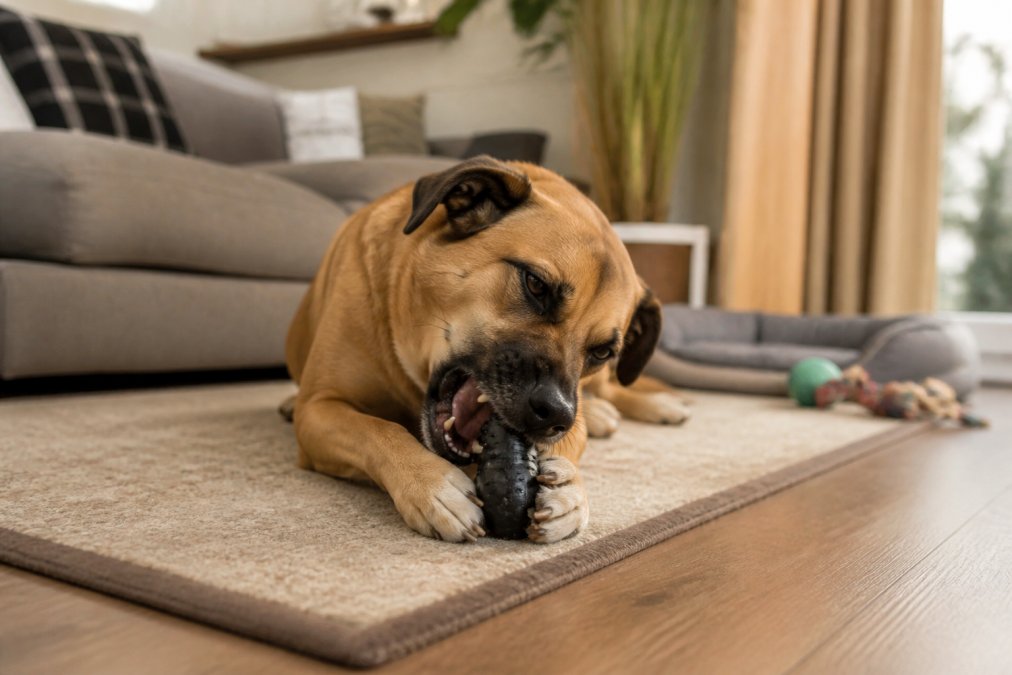
Identify your dog's chewing style. Anxious dogs benefit from calming toys and environmental management. Bored dogs need mental stimulation and regular activity.
Provide multiple toy types. A rotation of textures, rubber, nylon, plush, interactive puzzle toys, maintains novelty and engagement. Rotate toys weekly so they feel new.
Supervise and redirect. When your dog chews inappropriate items, interrupt gently and redirect to an appropriate toy. Consistency teaches your dog where chewing is acceptable.
Exercise and enrichment reduce destructive behavior. Regular walks, play sessions, and mental stimulation address the underlying need that drives excessive chewing.
Manage environment access. Don't leave tempting items within reach. Physical management prevents the behavior from becoming a habit.
Consider anxiety management. If your dog chews destructively only when you're away, separation anxiety may be the cause. Consult your veterinarian about anxiety management strategies.
According to the American Kennel Club's behavior guidance, destructive chewing is one of the most common behavioral complaints among dog owners, and it's nearly always preventable through appropriate toy selection and management.
Selecting the best durable toys for aggressive chewers requires understanding both material science and your dog's individual needs. The toys covered here have proven durability records, but the right choice depends on your dog's chewing intensity, size, and engagement preferences.
My Store's Bite-Resistant Waterproof Mat ($22.99) provides a practical foundation, a designated chewing zone that protects your home while giving your power chewer an appropriate outlet. Pair it with one of the interactive toys like KONG Extreme or West Paw Zogoflex Tux for comprehensive enrichment. Shop Pet Essentials Now and discover how durable toys transform destructive behavior into healthy, engaged play.

Frequently Asked Questions
What are the toughest materials for durable toys for aggressive chewers?
Natural rubber, heavy-duty nylon, and proprietary elastomer compounds like Zogoflex offer the best durability for aggressive chewers. Natural rubber toys from KONG Extreme provide unpredictable bounce and mental stimulation, while nylon options like Nylabone Dura Chew feature textured surfaces for dental health. Look for BPA-free, food-grade materials that resist puncturing and tearing. GoughNuts uses engineered rubber compounds with a safety indicator layer that shows when replacement is needed. The best choice depends on your dog's chew intensity and whether you want treat-dispensing features.
How do I choose the right size chew toy for my power chewer?
Select a toy larger than your dog's mouth to prevent choking hazards. For large breeds, choose toys at least 3-4 inches in diameter. Consider your dog's jaw strength and chewing style: heavy-duty chewers need thicker, denser toys, while moderate chewers can use slightly thinner options. Supervise initial play to ensure proper fit. Toys should be too large to swallow whole but small enough for comfortable grip. If your dog is between sizes, opt for the larger option. Replace toys as they wear to maintain safety standards and prevent ingestion of small fragments.
What signs indicate a dog toy is unsafe for my aggressive chewer?
Remove toys showing tears, punctures, or missing pieces immediately, as these create choking hazards and swallow risks. Watch for toys with exposed stuffing, loose squeakers, or fraying seams. If a toy has a red indicator layer (like GoughNuts), replacement is due when red shows through. Discard toys that smell off or show mold growth. Hard toys that crack or splinter pose dental and intestinal risks. Toys losing their shape or becoming sticky indicate material breakdown. Supervise play and inspect toys weekly for wear. Replace toys on a regular cycle, typically every 2-4 weeks for aggressive chewers, rather than waiting for visible damage.
Do veterinarians recommend specific materials for aggressive chewers?
Veterinarians recommend natural rubber, food-grade nylon, and non-toxic elastomers for power chewers. Materials should be BPA-free, phthalate-free, and FDA-compliant to prevent toxicity. Toys with safety indicator systems (like GoughNuts) appeal to vets because they signal replacement timing clearly. Treat-dispensing toys encourage mental stimulation and reduce boredom-related destructive behavior. Avoid rawhide, cooked bones, and soft plastics that splinter or tear easily. West Paw Zogoflex is veterinary-approved for its durability and recyclability. Always supervise play with new toys and choose options designed specifically for aggressive chewers rather than standard toys that won't withstand strong jaw pressure.
How often should I replace durable toys for aggressive chewers?
Inspect toys weekly and replace them every 2-4 weeks depending on chew intensity. Extreme power chewers may destroy toys faster, while moderate chewers extend toy life. Check for visible wear, material degradation, and safety indicator signals. Rotating multiple toys extends individual toy life and maintains enrichment variety. Budget-friendly approach: buy several durable toys and swap them regularly to prevent boredom and reduce replacement frequency. High-quality toys like GoughNuts and West Paw Zogoflex may last longer despite aggressive chewing due to superior material density. Replace immediately if toys show tears, expose internal materials, or lose structural integrity, regardless of purchase date.
This article was written using GrandRanker