

7 Best Automatic Cat Feeders for Busy Pet Parents (2026)
Table of Contents
- Best Automatic Cat Feeders: Quick Comparison
- How We Picked the Best Automatic Cat Feeders
- 1. WiFi 3L Smart Pet Feeder with Camera & Speaker: Best for Remote Monitoring
- 2. 3.5L Automatic Robot Pet Feeder: Best for Portion Control and Durability
- 3. Automatic Pet Feeder with Double Bowl: Best Budget Pick for Food and Water
- 4. Large-Capacity Automatic Pet Water & Food Feeder: Best for Multi-Pet Homes
- What to Look For in an Automatic Cat Feeder for Wet Food
- How to Set Up an Automatic Cat Feeder the Right Way
- Frequently Asked Questions
Last Updated: September 6, 2026
An automatic cat feeder dispenses precise portions on a schedule you control, even when you are stuck in meetings or traffic. This guide from My Store breaks down the best automatic cat feeders for busy pet parents in 2026, focusing on which models deliver on health, convenience, and peace of mind.
The feeders below range from budget gravity dispensers to high-tech WiFi models with cameras. We prioritize features that prevent obesity, reduce mealtime anxiety, and survive a curious cat. We’ll show you how to match a feeder to your cat’s habits and highlight pitfalls that lead to jammed kibble.
Best Automatic Cat Feeders: Quick Comparison
An automatic cat feeder is a timed device that dispenses preset amounts of dry food at scheduled intervals. The best options offer dual power supply, anti-jam technology, and a stainless steel bowl. Here is our comparison of top models.
| Feeder Model | Price | Capacity | Best For | Standout Feature |
|---|---|---|---|---|
| WiFi 3L Smart Feeder | $126.54 | 3L | Remote monitoring | Camera & two-way audio |
| 3.5L Robot Feeder | $117.20 | 3.5L | Portion control | Voice recording & stainless tray |
| Double Bowl Dispenser | $79.44 | 2 Bowls | Budget buyers | Food & water in one unit |
| Large-Capacity Feeder | $80.76 | 3.8L | Multi-pet homes | Gravity refill system |
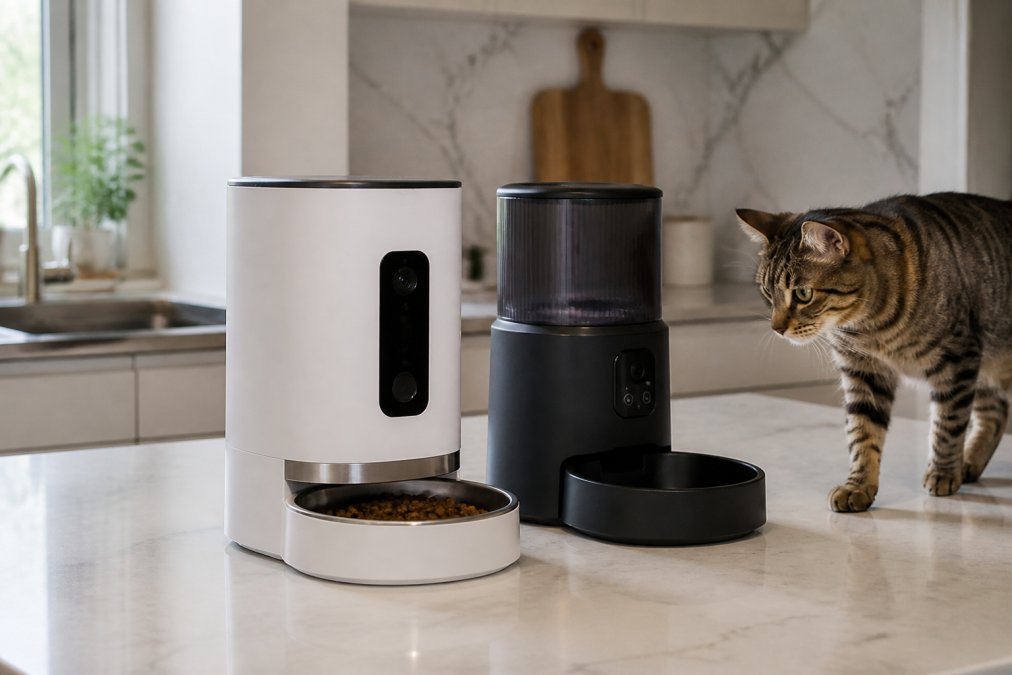
How We Picked the Best Automatic Cat Feeders
We selected models based on long-term daily use, not unboxing appeal. We evaluated dispensing reliability, portion control accuracy, and ease of cleaning. A feeder that cannot be disassembled for washing is a health hazard, so we prioritized dishwasher-safe or detachable parts.

We also considered behavioral impact and accessibility for senior pets. A feeder that is too tall or complex can be a barrier for older cats. Finally, we checked for BPA-free plastic and sturdy construction. Here is the breakdown of our top picks.
1. WiFi 3L Smart Pet Feeder with Camera & Speaker: Best for Remote Monitoring
Our top pick is the WiFi 3L Smart Pet Feeder, best for pet parents who travel or work long shifts. The built-in camera and two-way audio let you check in and speak to your cat, easing separation anxiety. You can dispense a meal from your phone anywhere.

The 3L capacity holds roughly two weeks of dry kibble for a single cat (avma.org). The ABS plastic body is durable, but the real value is smart connectivity. You can watch your cat eat in real-time or review footage later to ensure they are eating normally.
The drawback is the plastic bowl, which needs frequent washing to prevent oil buildup. At $126.54, you are paying for the camera and app-controlled feeding, worth it if you value the connection.
2. 3.5L Automatic Robot Pet Feeder: Best for Portion Control and Durability
If managing your cat’s weight is the priority, the 3.5L Automatic Robot Feeder is superior. It offers programmable time and portion settings for up to 4 meals daily, with each meal controlling 1-20 servings. This granular control is crucial for obesity prevention.

The standout feature is the detachable food-grade stainless steel tray, which prevents chin acne and is durable. An infrared sensor stops dispensing when the bowl is full, preventing overflow and waste.
A unique addition is the 10-second voice recorder, which plays your voice calling your cat at feeding time. This provides a familiar audio cue that soothes anxiety. The dual power supply (adapter or batteries) ensures feeding continues during outages, though batteries are not included.
3. Automatic Pet Feeder with Double Bowl: Best Budget Pick for Food and Water
Not every household needs WiFi. The Automatic Pet Feeder with Double Bowl is the best budget pick for scheduled feeding without app complexity. It combines a food dispenser with a water reservoir in one compact unit.
This gravity-based system refills the bowl automatically as your cat eats. It is made of BPA-free PP plastic, making it lightweight. While it lacks portion control, it suits cats who self-regulate or as a backup feeder.
The trade-off is maintenance: food is exposed to air, reducing freshness, so regular cleaning is needed. At $79.44, it is an affordable entry point with a simple design that is less likely to break. For a kitten or senior cat with no weight issues, this is a solid choice.
4. Large-Capacity Automatic Pet Water & Food Feeder: Best for Multi-Pet Homes
For multi-cat households or larger dogs, the Large-Capacity Automatic Pet Water & Food Feeder is the workhorse. With a 3.8L food capacity and a separate 2.1kg water reservoir, it reduces refill frequency in high-consumption homes.
Separate feeding and hydration stations encourage better water intake, which helps prevent urinary tract issues. The water reservoir uses a gravity refill mechanism, ensuring fresh water without electrical pumps that can fail.
This unit maintains baseline food and water availability but lacks smart features for strict portion control or remote feeding. Its durability and capacity make it reliable for busy households. The PP material is easy to wipe down, though the large size needs a dedicated corner.
What to Look For in an Automatic Cat Feeder for Wet Food
Automating wet food is harder than dry kibble because moisture promotes bacterial growth. Most standard feeders are for dry food only; using them for wet food leads to spoiled meals and digestive upset. If you need to automate wet food, look for a feeder engineered for perishable ingredients.
The Cooling Mechanism Is Non-Negotiable
Wet food left at room temperature for more than a few hours breeds bacteria (the FDA). The safest feeders use one of two approaches:
- Ice pack compartments: A removable gel pack sits beneath or beside the food tray to keep portions cool. This is the most common design, and it works well for a single day of meals, but the ice pack must be frozen solid every night or the food will spoil by afternoon.
- Active cooling (thermoelectric): A small Peltier cooler actively chills the food compartment. These are rarer and more expensive, but they maintain a consistent temperature without daily freezing. The trade-off is higher energy consumption and a low hum that some sensitive cats may notice.
Ice pack feeders work fine for a single cat eating two meals a day, but struggle in multi-cat homes where the feeder is opened more frequently, letting warm air in.
Sealed Compartments vs. Open Trays
The best wet food feeders use individually sealed, rotating trays that expose only one meal at a time, preventing moisture loss. Open-tray designs dry out food and create a crust many cats refuse.
Portion Size Realism
Wet food portions are typically 1.5 to 3 ounces per meal, much smaller than dry kibble servings. A feeder that dispenses in 1-ounce increments is more useful. Check the minimum dispense weight; if it cannot reliably drop a 2-ounce portion without jamming, it will not work.
Cleaning Is the Real Maintenance Burden
Wet food residue is greasy and harbors bacteria. The feeder must be fully disassemblable with dishwasher-safe parts. If the manufacturer says "wipe clean only," walk away. A feeder that cannot go in the dishwasher becomes a hygiene problem within a week.
The Hybrid Approach Is Often the Smartest
Most veterinarians and experienced owners do not automate every wet meal. A practical strategy is:
- Use a standard dry-food automatic feeder for one or two scheduled dry meals during the day.
- Feed wet food manually in the morning and evening when you are home.
- Use a wet food feeder only for the single meal that falls during your longest absence, such as a lunchtime feeding.
This hybrid approach provides automation where it matters most without the daily ice pack management and cleaning burden. It also keeps your cat on a consistent wet food routine, supporting urinary tract health.
If you decide a wet food feeder is right, budget for a model with at least 12-hour cooling capacity, sealed individual trays, and dishwasher-safe components. These features separate a feeder that lasts years from one that ends up in a cabinet.
How to Set Up an Automatic Cat Feeder the Right Way
Setting up an automatic cat feeder takes about 15 minutes, but the real challenge is the behavioral transition. A cat that has free-fed for years will not instantly accept a machine that doles out portions. The setup has two phases: mechanical installation and behavioral transition.
Phase 1: Mechanical Setup
Place the feeder on a stable, level surface away from walls to prevent kibble from sticking in the chute. Wash all removable parts with warm soapy water, rinse, and dry completely before first use to remove manufacturing residue and plastic odor.
Fill the hopper with dry kibble, avoiding oddly shaped or high-fat varieties prone to jamming. Mix in a small desiccant bag to absorb humidity and keep kibble crisp.
Program the feeding schedule starting with the portion size recommended by your vet. Use the manual feed button to test the mechanism and watch the first scheduled feeding closely. If your feeder has a battery backup, install fresh batteries even if using the adapter, ensuring the schedule persists during outages.
Phase 2: The Behavioral Transition (The Part Most Guides Miss)
A sudden switch from free-feeding to scheduled meals can trigger anxiety, excessive meowing, or food aggression. The transition should take 7 to 10 days. Here is a proven approach:
Days 1-3: Familiarization. Place the feeder on the floor, unplugged, with the bowl filled with a small amount of kibble. Let your cat investigate and drop treats near it. Do not turn it on yet.
Days 4-5: Manual feeding from the feeder. Use the manual feed button to dispense regular meals while you are present. This teaches your cat that food comes from the machine, but you are still the trigger. Keep the schedule consistent.
Days 6-7: First scheduled feeding. Program one meal per day on the automatic schedule, ideally when you are away. Keep other meals manual so your cat experiences the machine dispensing food while still having human-led meals.
Days 8-10: Full automation. Move all meals to the automatic schedule and monitor behavior closely. Some cats will wait by the feeder, which is normal. If your cat stops eating, hides, or shows stress, step back to manual feeding for a few days and try again.
Addressing Anxiety and Food Aggression
If your cat becomes anxious, try these adjustments:
- Use the voice recording feature (if available) to call your cat to the bowl at feeding time. A familiar voice reduces the strangeness of the machine.
- Feed smaller, more frequent meals during the transition. Four small meals are less overwhelming than two large ones.
- Place the feeder away from high-traffic areas where your cat might feel vulnerable while eating.
For multi-cat households, the transition is more complex. A cat used to grazing may become food-aggressive when portions are restricted. Consider feeding cats in separate rooms for the first two weeks, then gradually reintroduce shared space.
Long-Term Maintenance for Years of Reliable Service
The mechanical setup is one-time, but maintenance is ongoing. Wipe the dispenser opening weekly to remove kibble dust and oil, and deep-clean the unit monthly. Check the auger and motor assembly for hair or debris. Replace the desiccant pack every 2-3 months.
Most automatic feeders last 2-4 years with regular use (consumerreports.org). The most common failure point is the motor or auger, not the electronics. Pay special attention to the auger shaft and dispensing chute where kibble dust cakes. A feeder cleaned monthly will outlast one only wiped down occasionally.
Following these maintenance tips ensures your device lasts for years and keeps your cat healthy. The behavioral transition takes patience, but the payoff is a cat that calmly waits for scheduled meals and a routine that fits your busy schedule.
Frequently Asked Questions
Do vets recommend automatic cat feeders?
Many vets support automatic cat feeders when they encourage scheduled feeding and portion control, which helps prevent obesity. They are especially useful for cats on a strict feeding schedule. However, vets advise against leaving a cat alone for multiple days with only a feeder, since you cannot monitor health or confirm the device dispenses correctly. Use the feeder to support your routine, not replace your presence entirely.
Can I leave my cat alone for 2 days with an automatic feeder?
Leaving a cat for 48 hours with only an automatic feeder is risky. A jammed kibble piece or power failure could stop meals. Models with battery backup and anti-jam technology, like the 3.5L Automatic Robot Pet Feeder, reduce this risk. Still, for trips longer than 24 hours, arrange for a pet sitter to check water, clean the bowl, and confirm meals are dispensing properly.
What is the best automatic cat feeder for wet food?
Most automatic feeders work best with dry kibble. Wet food requires refrigeration and spoils quickly at room temperature. For wet food, look for a feeder with a sealed, ice-pack cooling compartment. If your cat needs wet food for health reasons, a feeder that dispenses kibble alongside a manually refreshed wet food meal is often a safer, more practical approach.
How do I choose between a gravity feeder and a programmable automatic feeder?
Gravity feeders keep a bowl full continuously, which encourages overeating and is not ideal for portion control. A programmable automatic cat feeder, such as the WiFi 3L Smart Pet Feeder, dispenses set portion sizes at scheduled times. This is better for weight management, multi-cat homes where one cat steals food, and busy pet parents who need consistency in their cat's feeding schedule.